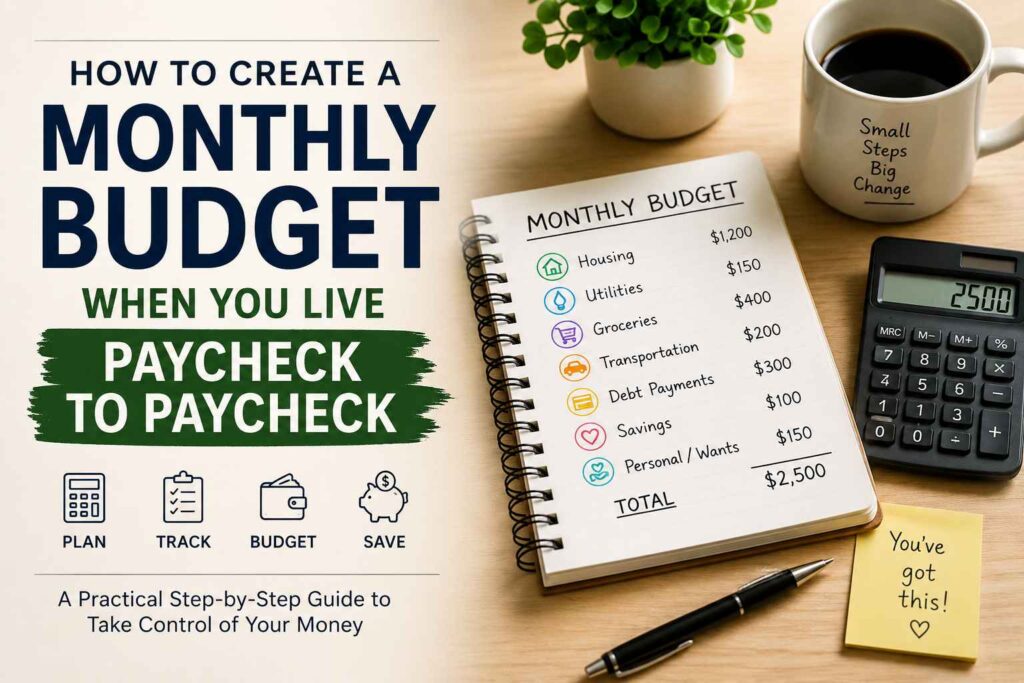
Reaching zero before your next payday can make every purchase feel risky, especially when one unexpected bill could throw off the entire month. A monthly budget can help, but it isn’t a judgment about your income or spending habits. It’s a practical cash-flow plan that shows where your money goes, helps you cover essentials on time, and creates a small amount of breathing room.
Start with the take-home pay that reaches your bank account, then review your recent spending instead of relying on guesses. You’ll assign bills to specific paydays, set limits for flexible costs such as groceries and entertainment, and build a realistic buffer, even if you can only start with a small amount. The goal isn’t to follow an ideal percentage split when your rent or debt payments already take up most of your income. It’s to create a plan that matches your real life and adjust it each month as your expenses change.
Begin by calculating your actual monthly income and listing the bills that must be paid first.
Key Takeaways
- Use your take-home pay, not your gross salary, when building a monthly budget.
- Review two to three months of bank and credit card statements to find your actual spending patterns.
- Assign each bill to a specific payday, then set limits for groceries, transportation, and other flexible costs.
- Automate fixed bill payments and transfer even a small amount into a separate emergency savings account.
- Build a starter buffer of one to two weeks of essential expenses before tackling high-interest debt more aggressively.
How to Create a Monthly Budget When You Live Paycheck to Paycheck
A realistic monthly budget starts with evidence, not guesses. Gather your last two or three months of bank statements, pay records, credit card bills, and receipts. Then use the income that actually reaches your account after taxes, insurance, retirement contributions, and other deductions.
If your hours, tips, freelance income, or pay schedule changes, calculate a conservative monthly average. Add your take-home pay from the last three months and divide by three. For irregular income, use a lower recent month when possible, then treat anything above that amount as extra money rather than money you already need.
Group your spending into four useful categories:
- Fixed essentials include rent, mortgage payments, basic utilities, insurance, and child care.
- Variable essentials cover groceries, fuel, medicine, household supplies, and personal care.
- Debt payments include required minimum payments on credit cards, loans, and other accounts.
- Wants include entertainment, dining out, shopping, and subscriptions you can review.
Use this worksheet formula before making major cuts:
Take-home income - fixed expenses - average variable expenses - debt minimums - planned savings = available spending money
Track every expense for 30 days before changing your budget aggressively. That record can reveal small repeat charges, but it can also show costs you cannot simply eliminate. Rules such as 50/30/20 are guidelines, not requirements. When housing, transportation, or medical costs consume most of your income, your categories need to reflect that reality.

### List every bill before you decide what to cut
Create one list for every recurring or occasional obligation. Record the bill’s name, amount, due date, payment method, and whether the amount changes. Include rent or mortgage, utilities, insurance, transportation, child care, subscriptions, and minimum debt payments.
Also add annual expenses that can disrupt a paycheck. Car repairs, school fees, gifts, and yearly insurance premiums still belong in your monthly plan. Add the expected yearly total and divide it by 12. For example, $1,200 in annual costs becomes $100 per month. Set that amount aside in a separate savings bucket if you can.
Separate needs from wants, but keep the list honest. You might cancel an unused subscription, yet groceries, transportation, and a modest amount for personal care may remain necessary. Cutting every nonessential expense often creates a budget you cannot maintain.
Use your real spending to set flexible categories
Review recent statements to find your average spending on groceries, fuel, medicine, household items, and other changing needs. Guessing too low can make your budget fail before the month ends.
After covering bills and planned savings, divide the remaining money by about 4.3 to set a weekly spending limit. For example, if $860 remains, your weekly limit is about $200. Dividing by four would give you $215, which may leave you short during a longer month. Adjust the categories after 30 days using your actual records, not an ideal spending target.
Build Your Monthly Budget Around Each Paycheck
A monthly budget can fail when it lists every bill together but ignores when your money arrives. Instead, connect each expense to a specific paycheck and plan the cash you need until the next deposit.
### Create a paycheck plan you can repeat
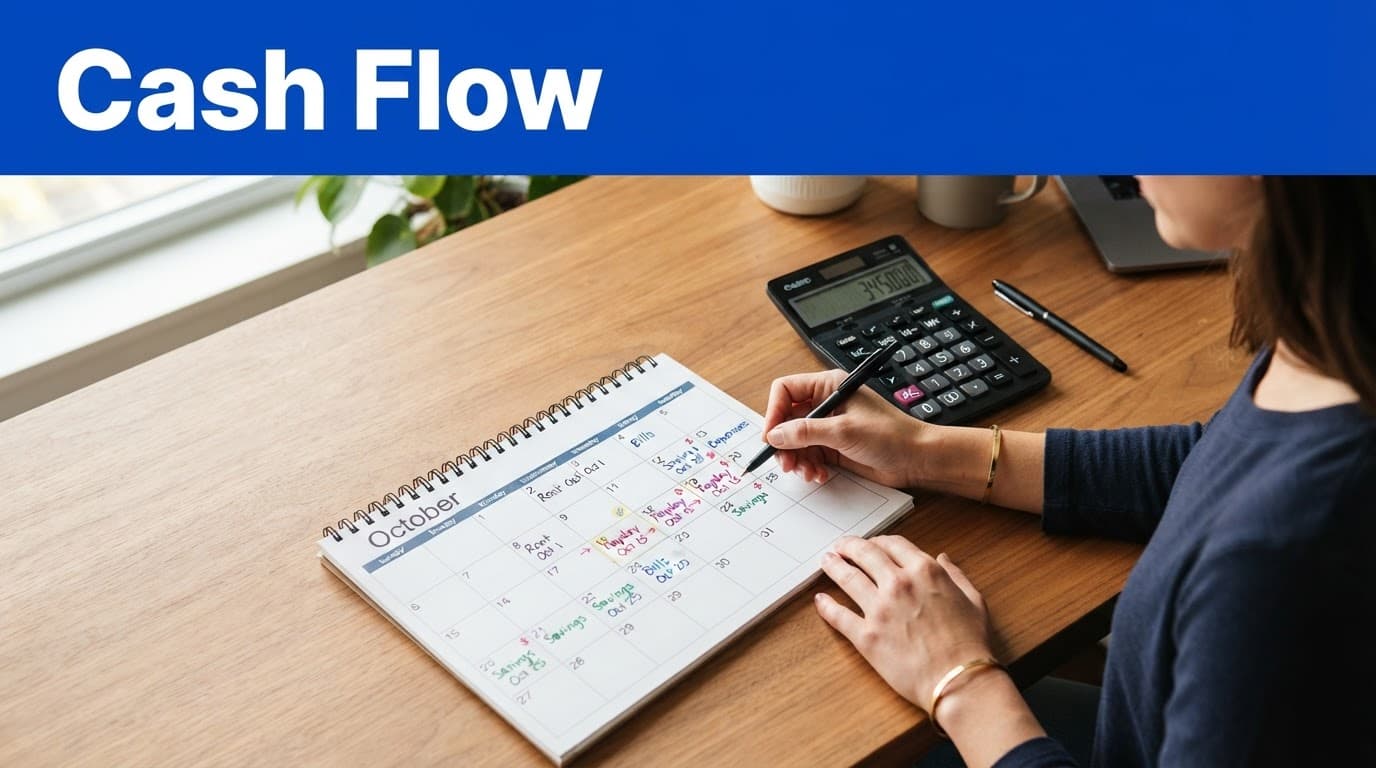
Create a paycheck calendar with your pay dates, bill due dates, expected amounts, and the balance needed until your next payday. Then use the same sequence each time money arrives:
- Deposit your paycheck into your income account.
- Move planned savings or buffer money to a separate account.
- Reserve money for bills due before your next paycheck.
- Set aside variable essentials, such as groceries, fuel, medicine, and household supplies.
- Pay debt minimums.
- Divide what remains into weekly spending limits.
For example, assume you receive $1,600 twice a month. Your first paycheck could reserve $1,000 for rent and early-month bills, $250 for groceries and transportation, $100 for debt minimums, and $50 for savings. The remaining $200 becomes weekly spending money until the next payday.
Your second paycheck could reserve $500 for later bills, $250 for variable essentials, $100 for debt minimums, and $50 for savings. That leaves $700 for the next two weeks, or about $350 per week.
These figures are examples only. Replace them with your income, bill amounts, due dates, and actual spending needs. Keep only the amount assigned to the current pay period in your everyday checking account. Move bill money and savings elsewhere so you don’t spend it by accident.
If you receive weekly pay, repeat the process every week and assign upcoming bills across those deposits. With biweekly pay, budget around two regular paychecks per month, even though two months each year usually contain a third paycheck.
Ask your utility, phone, internet, insurance, or credit provider whether you can change a due date. Aligning bills with your paydays can reduce the amount of cash you need to hold between deposits. Set up automatic payments only after confirming that the assigned paycheck will cover them, and leave enough room for pending transactions to avoid overdraft fees.
Handle months with three paychecks or uneven income
An extra paycheck shouldn’t automatically become spending money. Give it a job before it arrives, such as catching up on overdue bills, funding annual expenses, building a starter emergency fund, paying high-interest debt, or covering a planned irregular cost.
For fluctuating income, build your monthly budget around your lowest reliable income, not your best month. Cover essential bills first, then direct extra income toward your current priority. Don’t count freelance payments, overtime, tips, or bonuses until the money reaches your account.
Make Room for Savings Without Breaking Your Budget
Saving can feel impossible when your paycheck already has a job before it arrives. Start with a small, repeatable amount rather than an impressive target that forces you back into credit card debt. Even 3% to 5% of your take-home pay can create progress, but a fixed amount you can sustain is just as useful.
Keep your priorities in order. Cover housing, food, utilities, transportation, insurance, and minimum debt payments first. Then build a starter buffer equal to one or two weeks of essential expenses. Once that buffer is in place, direct more money toward high-interest debt and larger savings goals.
Set up a separate savings account or a labeled savings bucket so the money doesn’t blend into your spending balance. Schedule an automatic transfer for payday, even if the amount is only $10 or $25. If a true shortfall occurs, pause or reduce the transfer. Using credit to maintain an unrealistic savings routine only shifts the problem to next month.
Cut spending with small changes you can keep
Look for changes that lower your monthly costs without making your budget miserable. Review your bank statements and choose only two or three actions at first. For example, you could cancel unused subscriptions, plan several meals before grocery shopping, and reduce food delivery to one planned order per month.

A shopping list can prevent impulse purchases, while one no-spend day each week gives you a simple boundary. You can also compare insurance premiums, phone plans, and internet packages when contracts or promotional periods end. Before buying something nonessential, apply a 24-hour pause. If you still want it tomorrow, check whether the purchase fits your current spending limit.
Track the result for one month, then adjust. Separate recurring savings, such as a lower phone bill, from one-time savings, such as selling an unused item. Don’t count uncertain overtime, hoped-for discounts, or unrealistic coupon savings until they actually affect your account.
Choose debt payments wisely when cash is limited
Make at least the minimum payment on every debt to protect your account from added fees and worsening credit damage. After that, send extra money toward one balance instead of scattering small payments everywhere.
The highest-interest method saves the most interest, especially with revolving credit card balances, payday loans, buy now, pay later accounts, and high-interest personal loans. If quick progress keeps you motivated, pay the smallest balance first and roll that payment into the next account.
Contact a lender before you miss a payment. Ask about a due-date change, hardship plan, reduced payment, or temporary relief. While urgent high-interest debt remains, avoid aggressive investing. First build a basic cash buffer, then increase debt payments and long-term contributions as your cash flow improves.
Track Your Budget and Fix Problems Before the Next Payday
A budget is a working system, not a document you create once and ignore. Set aside a short check-in each Sunday or payday to compare planned and actual spending, review upcoming bills, check account balances, and move money between categories before a small problem grows.
Use a simple spreadsheet to see your cash flow
A spreadsheet gives you one clear view of money coming in and going out. Create columns for:
- Date
- Paycheck or income source
- Bill or purchase
- Category
- Amount
- Payment method
- Due date
- Remaining balance
Use separate tabs or sections for monthly bills, paycheck assignments, variable spending, debt balances, and savings goals. You can also use a notes app, bank alerts, cash envelopes, or a reputable budgeting app. Envelope-style tools such as Goodbudget and manual trackers such as Money Manager can help, but check privacy practices, fees, account access, and data-sharing policies before connecting your financial accounts.

Keep the formulas simple. Subtract total planned spending from take-home income to find the amount still available. If you have $240 for weekly spending and three weeks remain, divide $240 by three to get an $80 weekly limit. Update the balance after each purchase, rather than waiting until the end of the month.
Know when your budget problem is a math problem
Repeated overspending isn’t always a discipline issue. Add your essential bills, food, transportation, insurance, and minimum debt payments. If that total exceeds your reliable take-home income, your budget has a gap that tighter spending alone can’t solve.
Troubleshoot the cause before your next payday:
- Ask a provider to lower a recurring bill or change its due date.
- Check whether you qualify for benefits, food assistance, utility relief, or local community support.
- Increase reliable income through additional hours, a second job, or a more stable client arrangement.
- Contact a nonprofit credit counselor for help reviewing debt payments.
- Ask a qualified professional for debt advice if missed payments or collections are growing.
If you forgot an annual bill, divide its expected cost by 12 and add a monthly sinking fund. For an overdraft, pause nonessential transfers, review pending charges, and contact your bank. If your budget is negative before discretionary spending, focus on lowering fixed costs or increasing income first. Avoid payday loans and quick-money promises, which can add fees and deepen the shortfall.
Frequently Asked Questions
Paycheck-to-paycheck budgeting works best when you plan around your actual cash flow. Use these answers to adjust your budget without forcing your finances into unrealistic rules.
How do you create a monthly budget when living paycheck to paycheck?
Start with your take-home income and review two or three months of bank statements, credit card bills, pay records, and receipts. List fixed expenses, variable essentials, debt minimums, planned savings, and flexible spending. Then assign bills to specific paychecks, set realistic weekly limits, and review the plan each payday.
What expenses should you include in a monthly budget?
Include rent or mortgage payments, utilities, insurance, transportation, child care, groceries, medicine, household supplies, debt minimums, subscriptions, and personal care. Add annual costs such as car repairs, gifts, school fees, and yearly insurance premiums by dividing the expected yearly total by 12.
How should you budget when your income changes each month?
Build the budget around your lowest reliable monthly income or a conservative average based on recent pay. Cover essential bills and minimum debt payments first, then treat overtime, tips, freelance payments, bonuses, or extra paychecks as additional money after it reaches your account.
How much should you save when money is tight?
Start with a small amount you can maintain, such as $10 or $25 per payday or 3% to 5% of take-home pay. First build a starter buffer equal to one or two weeks of essential expenses. After that, direct more available money toward high-interest debt and larger savings goals.
What should you do if your budget is negative before the month begins?
A negative budget means essential expenses and required debt payments exceed reliable take-home income. Focus on lowering fixed costs, asking providers about lower bills or changed due dates, checking for benefits or utility assistance, increasing reliable income, and contacting a nonprofit credit counselor. Avoid payday loans because their fees can increase the shortfall.
Conclusion
Creating a monthly budget on a paycheck-to-paycheck income starts with your actual transactions, not a fixed percentage rule. Review your last two or three months of bank and credit card activity, then write down every bill, amount, and due date. Assign each cost to the paycheck that will cover it, so you can see what money is available before the next deposit arrives.
Next, choose one or two spending changes you can maintain, such as canceling an unused subscription or setting a weekly limit for dining out. Automate a small transfer to a separate savings account on payday, even if you can only afford $10 or $25. Adjust the amount when necessary, but keep the habit sustainable.
Your budget doesn’t need to be perfect to help. Progress means fewer surprises, more control over each paycheck, and a growing margin between your income and expenses. As that margin improves, you can strengthen your starter buffer and pay down high-interest debt with less pressure.
This Post is last Updated on: August 15, 2026
About The Author
