How You Can Make Your First $100 Online with Affiliate Marketing

Key Takeaways
- Start with one niche, one product, and one free traffic source so your effort stays focused.
- Choose beginner-friendly offers that solve one clear problem and are easy to explain in one sentence.
- Use free traffic like SEO, Pinterest, YouTube Shorts, Quora, or niche communities to get clicks without paid ads.
- Track every click and improve what works, because small commissions can add up faster than one large sale.
- The first $100 usually comes from consistency, not from perfect content or a huge audience.
You don’t need a huge audience, paid ads, or advanced skills to make your first $100 online with affiliate marketing. Most beginners struggle because they chase too many platforms, follow random advice, and expect quick results before anything has time to work.
If you focus on one niche, one product, and free traffic, you can keep things simple and move faster. This guide gives you a practical path that fits a zero-budget start, so you can build momentum without feeling overwhelmed.
First, narrow your niche and choose one product you can promote with confidence.
“This post may contain affiliate links. Read our disclosure for more info.”
What affiliate marketing is and how you actually get paid
Affiliate marketing is a simple setup. You recommend a product or service, someone buys through your link, and you earn a commission. That means you don’t need to create your own product to make your first $100 online with affiliate marketing, you just need the right offer and a clear way to send buyers to it.
The process feels invisible at first, but it follows a clean path. You share a tracked link, the network records the sale or action, and the merchant pays you after the commission clears.
How affiliate marketing works in plain English
You join an affiliate program, get a unique link, and place that link in content where it makes sense. That content could be a blog post, a YouTube description, a Pinterest pin, or a social media bio.
When someone clicks your link and completes the required action, you earn money. That action depends on the program:
- Sale commission: You get paid when someone buys.
- Lead commission: You get paid when someone signs up or submits a form.
- Click commission: You get paid for qualified clicks, which is less common for beginners.
For your first $100, sale-based programs are usually the easiest to understand. You recommend something useful, the reader buys it, and you get a cut.
Your link does the tracking, but your content does the selling.

Where the money actually comes from
You don’t get paid by “the internet.” You get paid by the merchant or the affiliate network behind the offer. Amazon, Digistore24, Impact, ShareASale, and similar platforms all handle tracking and payouts in different ways.
Most programs follow the same basic pattern:
- You join the program.
- You promote a specific offer with your unique link.
- A visitor buys after clicking your link.
- The sale gets tracked.
- Your commission sits in your account until payout.
Payouts usually happen after you pass a minimum threshold, such as $10, $50, or $100. Some programs pay by bank transfer, PayPal, or direct deposit, so you need to check the payment rules before you promote anything.
A simple example of your first commission
Say you write a short post about a budget-friendly tool or product. Ten people read it, one person clicks your affiliate link, and one buys a $40 item with a 10% commission. You earn $4.
Now repeat that with a few more posts, pins, or videos. Four or five small commissions can add up fast, and that is how your first $100 starts to happen. The key is not waiting for one giant sale, but stacking small wins until the total grows.
Why affiliate marketing is still one of the easiest ways to start in 2026
You can still make your first $100 online with affiliate marketing because the setup stays simple. You don’t need to build a product, handle shipping, or hire help. You need one offer, one audience, and one place to send people who are already looking for a solution.
That low barrier matters more than ever. Many online income ideas ask for money, technical skill, or a long learning curve before you see anything back. Affiliate marketing lets you start small, test fast, and learn by doing.
You can start with almost no money
A big reason affiliate marketing works for beginners is that your startup costs can stay near zero. You can publish content on a free blog platform, a social channel, or a video account before you spend a cent.
That keeps the pressure low. Instead of worrying about product creation or inventory, you focus on one clear task, helping someone make a buying decision.
A simple beginner setup can include:
- A free or low-cost content channel
- One affiliate offer that fits your topic
- Basic tracking so you know what gets clicks
- Short, useful content that answers a real question
You can also use free tools to save time. A notes app, a headline generator, or a basic keyword tool is enough to get started. You don’t need a fancy setup to make your first commission.
Free traffic still gives you a real path to buyers
You don’t need paid ads to get your first click. Search traffic, Pinterest, YouTube Shorts, TikTok, and helpful posts in niche communities can all bring you visitors without a budget.
That matters because the people who click affiliate links usually already want help. They are not browsing for fun. They are looking for a product, a fix, or a clear recommendation.
A few interested visitors are more useful than a large crowd that has no buying intent.

You only need a small stream of the right people to start. One helpful post can keep working for you long after you publish it, especially if it answers a specific question.
The right offers make your first sale easier
Not every affiliate offer is easy for a beginner. The best ones solve one clear problem and do not need a hard sell. When the choice feels simple, people buy faster.
That is why beginner-friendly offers often include:
- Budget tools
- Starter software
- Digital guides
- Simple services with a clear benefit
A student looking for a study app, for example, can decide quickly if the product fits. A reader looking for a basic email tool can do the same. In both cases, you are helping them make a decision, not forcing one.
A small case study makes this clear. If you publish one honest review, one comparison post, and one short social post about the same offer, you give yourself three chances to earn from the same product. That is often enough to turn a few clicks into your first payout.
You can test and improve without guessing
Affiliate marketing is also easy to start because you get feedback quickly. If a post gets clicks but no sales, you know the offer needs work. If one headline pulls more traffic, you know what to repeat.
That kind of feedback helps you improve without wasting time. You are not stuck waiting months to see if your idea works. You can publish, watch, adjust, and keep moving.
For a beginner, that simple loop is a huge advantage. The sooner you see what people click, the sooner you can focus on the content that brings in your first $100.
The simple step-by-step plan to make your first $100 online with affiliate marketing
The fastest way to make your first $100 online with affiliate marketing is to keep the plan small. You only need one niche, one product, one content style, and one traffic source to start.
That simple setup helps you move with purpose. Instead of chasing every trend, you build around a clear buyer, a clear offer, and content that gives people a reason to click.
Choose one profitable niche you can actually stick with
Your niche should have real demand, easy content ideas, and strong buyer intent. That means people already search for help, compare products, and spend money in that topic.
Good beginner niches include AI tools, making money online, tech gadgets, fitness, and education. These topics work well because you can write tutorials, reviews, and comparisons without needing expert-level knowledge.
Pick a niche you can talk about for months, not just one week. If you get bored fast, your content will slow down, and so will your chances of earning.
A simple filter helps:
- People are already buying products in this topic.
- You can explain it in plain language.
- You can come up with content ideas without forcing them.
A niche can look popular and still be a bad fit. If you choose it only because other people are talking about it, you may run out of ideas before you earn anything.

If you can answer one simple rule, you’re on the right track: choose a topic you can talk about for months and that has products people already buy. That is a much better starting point than chasing whatever sounds exciting today.
Join beginner-friendly affiliate programs that match your niche
Once your niche is clear, join programs that fit the product and the audience. The best program is not always the one with the flashiest payout. It is the one that makes sense for what you promote.
For beginners, a few common options stand out:
- Amazon Associates works well for physical products people already know and trust.
- Impact gives you access to many brands and services, which is useful if your niche has software or niche products.
- Digistore24 is strong for digital products, guides, and training offers.
- ClickBank also focuses on digital offers and can work well when the product solves a clear problem.
Look for programs that are simple to join, easy to understand, and clear about commissions. You also want products that solve a real problem, because that makes promotion easier.
Ask yourself a few basic questions before you apply:
- Is the approval process beginner-friendly?
- Do I understand how I get paid?
- Does this product help my audience do something useful?
If the answer is yes, you are on the right path. A program with a smaller commission can still bring better results than a high-paying offer nobody wants.
Pick one product and learn why people would buy it
Do not promote everything at once. Choose one product and learn exactly why someone would pay for it. That keeps your content focused and makes your message stronger.
A good first product is useful, easy to explain, relevant to beginners, and tied to one clear problem. If you can describe the result in one sentence, that is a good sign.
Before you write anything, spend a few minutes on these steps:
- Read customer reviews and look for repeated complaints or praise.
- Study the product page and note the main benefit.
- Think about the buyer’s goal, not just the features.
For example, if you promote a study app, the buyer may want fewer distractions and better grades. If you promote a fitness tool, the buyer may want a simple way to start working out without confusion.
That buyer goal matters more than the product itself. Once you understand it, your content sounds helpful instead of random.
Create simple content that helps, explains, or compares
You do not need fancy content to get your first sale. You need content that answers one question or helps someone make a choice.
Start with simple formats that are easy to produce:
- Tutorials that show how something works
- Best tools lists for a specific need
- Comparisons between two products
- Honest reviews with pros, cons, and who it is for
- Posts that solve one common problem
These ideas work because they meet the reader where they already are. Someone searching for a tool comparison or a how-to post is often close to buying.
You can publish this content on a blog, Pinterest, YouTube Shorts, Instagram Reels, or even in a helpful Facebook group if the rules allow it. The format matters less than the value.

Helpful content builds trust, and trust leads to clicks. When people feel understood, they are more open to your recommendation.
Use free traffic methods to get your first clicks
You do not need to be everywhere. You need to pick one or two free traffic methods and stay consistent long enough to get noticed.
These are the most realistic beginner options:
- SEO blogging helps you show up when people search for answers.
- Pinterest pins can send traffic to blog posts, guides, and reviews.
- YouTube Shorts can get quick views when you explain one clear idea.
- Quora answers let you place your advice where people already ask questions.
- Facebook communities can work well when you join with a helpful mindset.
The goal is simple. Get in front of people who are already searching for a solution. That gives your affiliate link a real chance to earn.
If you use SEO, write titles that match what people type into Google. If you use Pinterest, make your pins clear and useful. If you use YouTube Shorts, keep the message short and focused on one benefit.
Consistency matters more than volume. Ten useful posts on one platform will beat scattered effort across five platforms.
Turn clicks into sales with honest recommendations
Clicks do not turn into sales when your message feels vague or pushy. You need to sound clear, useful, and honest.
Focus on the benefit the reader cares about most. Instead of saying, “This tool is great,” say what it helps them do. For example, “This app helps you edit videos faster if you are just getting started.”
Your calls to action should feel natural. Try phrases like:
- “See if it fits your needs.”
- “Check the pricing here.”
- “Read more details before you decide.”
You should also recommend products you would truly suggest to a friend. If you would not buy it yourself, leave it out. That keeps your content believable and protects your trust.
A beginner often loses sales by sounding too broad or too salesy. Clear words win. Honest details win. When people understand why the product helps them, they are far more likely to click and buy.
A simple first sale can look like this: you write one helpful post, share it on one traffic source, and send readers to one product that solves one problem. That is how your first $100 starts to take shape.
A realistic timeline for reaching your first $100 online with affiliate marketing
You can make your first $100 online with affiliate marketing faster than most beginners expect, but it still takes steady effort. The timeline depends on your niche, your content quality, and how often you publish.
The biggest mistake is expecting instant results. A better approach is to treat your first $100 like a first milestone, not a lottery win.
Weeks 1 to 2: set up and publish your first content
During the first two weeks, focus on one niche, one offer, and one traffic source. Your goal is not profit yet, it is getting your first pages or posts live.
A simple start looks like this:
- Choose one product with clear demand
- Write one helpful review or comparison post
- Share it on one free traffic channel
- Track clicks so you know what gets attention

Weeks 3 to 8: let traffic build and improve what works
This is where your effort starts to compound. If you keep posting useful content, you give yourself more chances to get clicks and sales.
Most first sales come after a few posts, not one perfect post.
A realistic target is a few pieces of content each week, then small improvements based on what people click. One post may bring nothing, while another brings your first commission. That pattern is normal.
Mistakes that slow beginners down and how to avoid them
The fastest way to make your first $100 online with affiliate marketing is to avoid the habits that waste your time. Most beginners do not fail because affiliate marketing is hard. They slow down because they make the same few mistakes over and over.
If you fix those early, you give yourself a much better shot at getting clicks and sales. Small changes matter here, because your first commission often comes from focus, not luck.

Trying to promote too many niches at once
One of the biggest beginner mistakes is jumping between topics. You post about fitness on Monday, gadgets on Wednesday, then money tips on Friday. That kind of mix makes it hard for people to trust your content, and it makes your own work harder.
Pick one niche and stick with it long enough to learn what people want. If you focus on one audience, your content gets sharper, your message gets clearer, and your links feel more natural.
A simple way to stay on track is to keep your first phase small:
- One niche
- One product
- One traffic source
- One main content style
That setup keeps you from scattering your energy. It also makes it easier to spot what works, because every click and sale comes from the same clear plan.
If your content feels random, your results usually do too.
Promoting products people do not really want
Some beginners choose offers based only on commission size. That often backfires. A high payout means little if the product is confusing, weak, or hard to explain.
Your first product should solve a clear problem. If someone can see the benefit right away, they are more likely to buy. For example, a beginner-friendly tool that saves time is easier to promote than a vague program with no obvious result.
Before you promote anything, ask yourself:
- Does this product fix a real problem?
- Can I explain it in one simple sentence?
- Would I feel comfortable recommending it to a friend?
- Does the page make the offer clear?
If the answer feels shaky, move on. A smaller commission from a good offer is better than chasing a bigger payout that never converts.
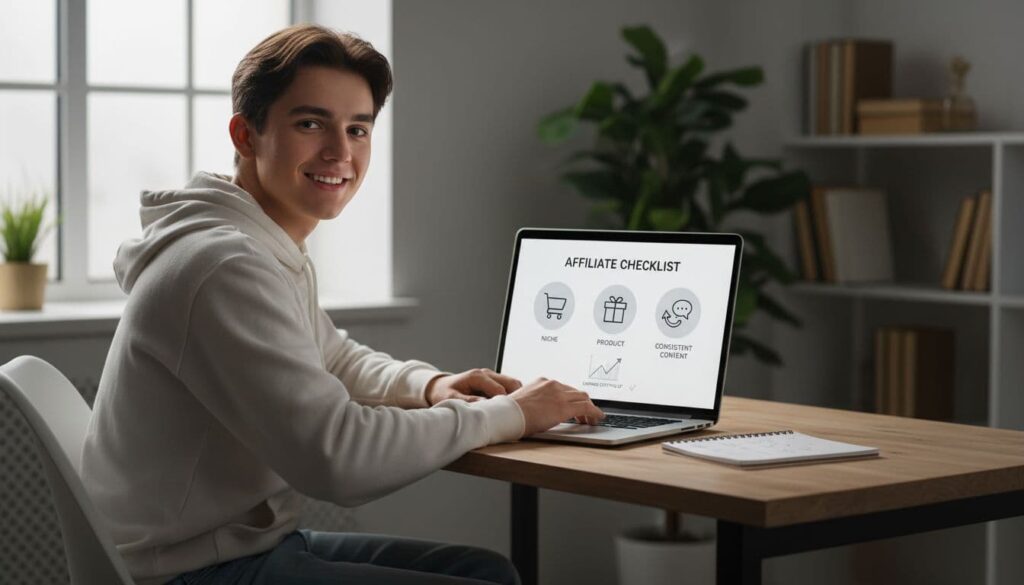
Waiting for perfect content instead of publishing and improving
Perfection slows beginners down more than bad strategy does. You can spend days rewriting one post, while another simple post could have already brought in clicks.
Publish useful content first, then improve it after you see real feedback. A short review, a comparison post, or a basic tutorial is enough to start. Once people click, you can tighten the headline, improve the intro, or add a stronger call to action.
This approach works better than guessing. You learn faster when you have data, even if the first version is plain.
A simple pattern helps:
- Publish the content.
- Track clicks and visits.
- Update weak headlines or sections.
- Repeat what gets attention.
A beginner who posts three solid pieces and improves them usually moves faster than someone who keeps planning. That is how you build momentum without getting stuck.
The goal is simple, keep your focus tight, choose offers that make sense, and publish before you feel fully ready. When you avoid these mistakes, your path to the first $100 gets much shorter.
Free tools that make affiliate marketing easier when you are starting out
You do not need a big budget to make your first affiliate sale. In fact, the right free tools can save you time, help you choose better products, and keep you focused on work that actually brings clicks.
Start simple. A small tool stack is better than a messy pile of apps you never use. When you know what to look for, free tools can carry you through the first stage of affiliate marketing with ease.
Use free research tools to find topics people already want
Before you write or post anything, check what people are already searching for. That gives you a better shot at traffic because you are answering real questions, not guessing.
These free tools are enough for a beginner:
- Google Trends helps you see if a topic is rising or fading.
- Google Search autocomplete shows real search phrases as you type.
- YouTube search suggestions reveal what viewers want to learn.
- Pinterest search shows common ideas people save and click.
Use them to spot simple, clear topics like product reviews, comparisons, and beginner guides. If people keep asking the same question, that topic is worth your attention.
Focus on questions with buying intent, because they usually lead to better affiliate clicks.
Create content faster without paying for design software
Good affiliate content does not need fancy graphics. It needs clarity. Free tools help you turn a plain idea into something easy to read, watch, or share.

A few useful free tools can cover most beginner needs:
- Canva Free for pins, thumbnails, and simple graphics
- CapCut for short videos and quick edits
- Google Docs for drafts, outlines, and post ideas
- Phone notes app for saving hooks, titles, and product ideas
Use one tool for writing, one for visuals, and one for video if you need it. That keeps your workflow simple and helps you publish faster. A clean post with a clear message will usually beat a polished post that never gets finished.
Track clicks so you know what is working
If you want to make your first $100 online with affiliate marketing, you need to know which posts get attention. Otherwise, you are just posting blind. Free tracking tools make that part much easier.
Start with a simple system in Google Sheets or Google Docs. Record the post title, the affiliate link used, the traffic source, and any clicks or sales you notice.
You can also use:
- Bitly to shorten links and track basic click data
- Google Search Console if you have a blog and want search data
- Linktree if you want one easy place to hold several links
Keep the tracking simple at first. You only need enough data to spot patterns. If one post gets clicks and another gets nothing, that tells you where to put more effort next.
A small tool stack can do a lot of work for you. Research with free search tools, create with free design apps, and track with a basic spreadsheet. That combination is enough to help you move faster without spending money upfront.
A simple beginner strategy you can start today
If you want to make your first $100 online with affiliate marketing, keep your first move small. Pick one product, write one helpful piece of content, and share it in one place where people already look for answers. That simple setup gives you a real shot at clicks without wasting time.
Choose one product that solves one clear problem
Start with an offer people already want. A product that solves one direct problem is easier to promote than a broad or fancy one. You want something you can explain fast and recommend with confidence.
A good beginner product usually has these traits:
- It fixes a clear pain point.
- The benefit is easy to understand.
- People already search for it or compare it.
- The page makes it simple to buy.
For example, if you choose a study app, your reader wants better focus or less stress. If you choose a basic AI tool, they want to save time. That kind of clarity helps you write better content and get more clicks.
Your first goal is not to promote everything, it’s to find one offer that fits one audience well.

Write one short post that answers a buying question
Once you have the product, create one piece of content that helps someone decide. A review, a comparison, or a “best for beginners” post works well. Keep it simple and useful, because people click when they feel understood.
Use this basic structure:
- State the problem the reader has.
- Explain how the product helps.
- Add one honest benefit and one limitation.
- End with a clear call to action.
A short example can look like this, “If you want to edit videos faster, this tool is a solid beginner choice because it keeps the process simple.” That kind of line sounds human, and it gives the reader a reason to keep reading.
Share it where buyers already spend time
Do not post everywhere. Put your content in one or two places that match your niche. If your audience uses Pinterest, make a pin. If they search Google, write a blog post. If they watch short videos, turn the same idea into a quick clip.
The goal is to place your link in front of people who already want help. One focused post shared well can do more than ten random posts. When you keep your message clear, your first affiliate clicks come faster, and your first commission gets much closer.
Conclusion
You don’t need a big audience or a complex setup to make your first $100 online with affiliate marketing. You need one clear offer, helpful content, and the patience to keep publishing until people start clicking.
That first $100 is usually the hardest part because you’re learning what your audience wants while you build trust. Keep your focus on consistency, not perfection, and let each post improve the next one.
Pick one niche, one product, and one platform today, then start creating helpful content around a real problem. The sooner you begin, the sooner your first commission gets within reach.
Read Also: AI Freelancing for Beginners: Earn Your First $100 Online in 2026
Frequently Asked Questions About Making Your First $100 Online with Affiliate Marketing
How long does it take to make your first $100 with affiliate marketing?
Most beginners need a few weeks to a few months, depending on niche choice, content quality, and how often they publish. The article’s plan works best when you focus on one product and one traffic source, since that keeps the learning curve manageable. A few small commissions can hit $100 faster than waiting for one large sale.
What is the easiest affiliate product to promote first?
A product that solves one clear problem is the easiest place to start. Starter software, digital guides, budget tools, and simple services are easier to explain than broad or vague offers. If you can describe the benefit in one sentence, it usually fits beginner promotion well.
Can you make affiliate sales without paid ads?
Yes, the article already points to free traffic methods like SEO, Pinterest, YouTube Shorts, TikTok, Quora, and niche communities. The key is to place helpful content where people are already looking for answers. One focused post can keep sending clicks long after you publish it.
How do affiliate commissions get paid?
You earn a commission when a tracked link leads to a sale, lead, or qualified click, depending on the program. The merchant or affiliate network records the action, then pays after you pass the program’s threshold. Payment methods often include PayPal, bank transfer, or direct deposit.
Affiliate Disclosure (FTC Compliant)
In accordance with the Federal Trade Commission’s guidelines, please assume that some of the links on this website are affiliate links. This means that I may earn a commission if you click on a link and make a purchase, at no additional cost to you.
As an affiliate, I only promote products and services that I have either used personally or thoroughly researched and believe will add value to my readers. Any compensation received does not influence the content, topics, or recommendations made on this website.
I am a participant in various affiliate advertising programs, including but not limited to programs designed to provide a means for websites to earn advertising fees by advertising and linking to products or services.
Please understand that your decision to purchase any product or service is entirely your own responsibility, and you should conduct your own due diligence before making any financial decisions.
If you have any questions regarding this disclosure, feel free to contact me.
Thank you for supporting this website.
This Post is Last Updated On July 11, 2026
About The Author
