Key Takeaways
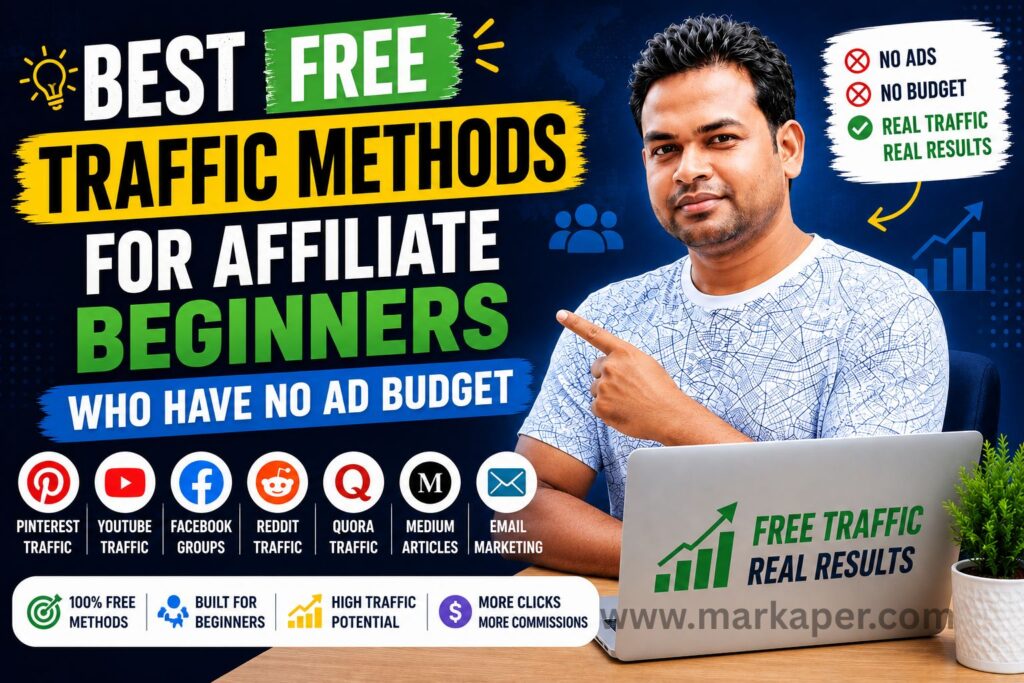
- Free traffic is the best starting point for beginner affiliate marketers with no ad budget because it lets you test offers without paying for every click.
- SEO blogging works well for long-term traffic because one strong post can keep bringing visitors for months.
- Pinterest, short-form video, and community answers can each drive targeted clicks even if you have a small audience.
- Email helps turn scattered free traffic into repeat visits and sales by giving you a direct follow-up channel.
- The fastest results usually come from using one traffic source to get attention and a second one to keep it.
If you’re starting affiliate marketing with no ad budget, paid traffic can burn through your money before you know what works. Free traffic methods for affiliate beginners give you room to test offers, learn what gets clicks, and build trust without guessing.
You don’t need a big setup to begin, either. If you don’t have a website yet, you can still start with platforms people already use, and this affiliate marketing without a website approach can help you get moving faster.
Free traffic takes time, but it also builds skills and long-term results. The smartest move is to pick one or two methods, stay consistent, and start with the traffic source that fits your style best.
“This post may contain affiliate links. Read our disclosure for more info.”
Why Free Traffic Is the Smartest Place to Start
If you’re new, free traffic gives you room to test without pressure. You can try one niche, one offer, and one content format before you spend a dollar.
That matters because your first job is not to buy traffic. Your first job is to learn what gets attention, what gets clicks, and what people actually want. Free traffic lets you do that while keeping your risk close to zero.
You can grow without gambling money
Paid ads can move fast, but they also punish mistakes fast. If your offer is weak, your message is off, or your audience is wrong, you pay for every bad click.
Free traffic methods for affiliate beginners give you a safer starting line. You can post on search-based platforms, social apps, or communities, then watch what people respond to. That feedback helps you improve before you ever think about scaling.
A simple example makes this clear. You might write a short review, publish a Pinterest pin, or answer a question in a forum. If that content gets clicks, you know the topic has life. If it gets nothing, you can change the angle without losing money.

You also get to test ideas in a smarter order:
- Pick a niche that solves a real problem.
- Publish one piece of helpful content.
- Send it through a free channel.
- Study the clicks, comments, and saves.
- Keep what works and drop what does not.
That process teaches you faster than guessing ever will. It also builds a path toward your first commission, which is why many beginners start with a simple affiliate plan for the first $100.
Your first traffic source should teach you, not drain you.
Free traffic helps you build real skills
Free traffic is more than a way to get visitors. It trains you in the exact skills you need to grow later.
When you use organic methods, you start learning SEO, content writing, audience research, and basic offer positioning. You notice which headlines get attention, which questions people ask, and which topics lead to clicks. That kind of feedback is hard to get when you skip straight to paid ads.
You also learn how people search and how they decide. A good blog post, short video, or social post forces you to answer one clear question. That habit makes your marketing better across the board.
Here’s what you gain along the way:
- SEO instincts: You learn how to choose topics people already want.
- Content skill: You get better at explaining ideas simply.
- Audience research: You start seeing what your niche cares about most.
- Offer testing: You can compare products and spot what converts.

These skills keep paying off later. If you decide to use paid traffic, you won’t be starting from scratch. You’ll already know how to write a clear hook, match an offer to a problem, and spot the content that deserves more reach.
That is why free traffic is a smart first move. It helps you build habits that work in legit ways to make money online and gives you a stronger base for every next step.
Trust matters more than quick clicks
People do not buy from the loudest creator. They buy from the one they trust.
Free traffic is one of the best ways to build that trust because it gives you space to be useful first. Helpful posts, short videos, and direct answers show that you understand the problem before you suggest a product. That makes your affiliate link feel like a recommendation, not a push.
You can see this in simple content formats. A blog post that compares two tools, a YouTube Short that solves one issue, or a Reddit answer that breaks down a mistake all do the same thing. They lower resistance. They make your link feel like the next step instead of the main event.
Helpful content also gives people a reason to come back. If you solve one problem well, they are more likely to trust the next thing you share.
When you start with free traffic, focus on this rule:
- Teach first.
- Recommend second.
- Sell only when the match is clear.
That approach works because it feels natural. You are not interrupting people, you are helping them move forward. Over time, that trust turns into clicks, then sales, then repeat visitors who recognize your name.
If you want your affiliate links to convert, start by earning attention the right way. Free traffic makes that easier, cleaner, and far less risky.
SEO Blogging That Can Keep Bringing You Visitors for Months
SEO blogging gives you something social posts rarely do, long-lasting traffic. One strong post can keep showing up in search, bringing in visitors day after day, long after you publish it.
That matters when you are starting with no budget. You put in the work once, then the post keeps doing its job. If you choose the right topic, write it well, and keep it updated, your blog becomes a traffic asset instead of a one-time post.
Why blogging works so well for affiliate marketing
Blog readers are usually closer to a decision than casual scrollers. They are searching for help, a fix, a comparison, or a product that solves a problem. That makes them easier to convert because they already have intent.
A person searching “best budget microphone for YouTube” is far more ready to click than someone passing by a random social post. The same goes for “how to start affiliate marketing with no money” or “best free keyword tools for beginners.” They are looking for an answer, and you can meet them there.
Blog content also fits affiliate marketing naturally. You can write:
- Comparisons that help readers choose between two tools.
- Reviews that break down what a product does well and where it falls short.
- How-to posts that solve a problem and point to the right tool at the right moment.
That mix feels useful, not pushy. You are not forcing a sale, you are helping readers make a smart decision.
How to find low-competition keywords you can actually rank for
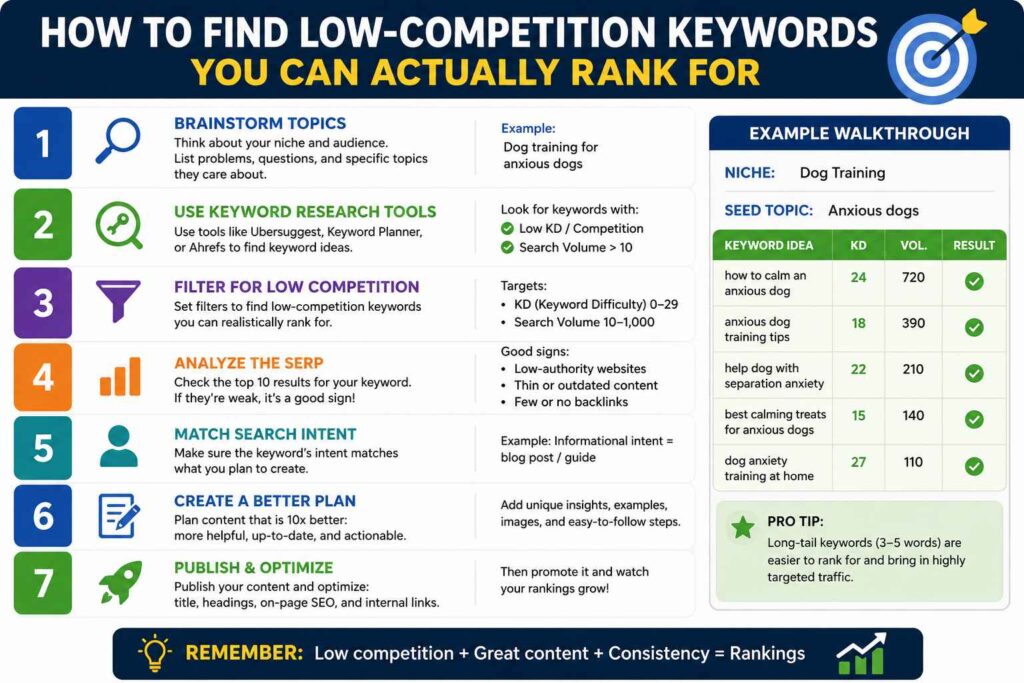
Start with long, specific search phrases instead of broad keywords. A term like “affiliate marketing” is too wide for most beginners, but “how to start affiliate marketing on a blog with no money” gives you a clear angle and a better shot at ranking.
Use free tools to spot those openings. Google Trends shows whether a topic is rising or fading. Ubersuggest can surface low-difficulty ideas. Keyword Surfer helps you spot search volume while you browse Google. Google Search Console shows what you already rank for, so you can expand on pages that are close to breaking through.
A simple keyword process looks like this:
- Search for a broad topic in Google.
- Look at autocomplete, “People Also Ask,” and related searches.
- Turn those ideas into problem-based phrases.
- Choose question keywords and longer phrases with clear intent.
- Check whether the topic has weak results you can beat with a better post.
Focus on phrases that sound like real questions people ask. If the keyword sounds too vague, it probably is. If it sounds like something a beginner would type at 11 p.m. while trying to fix a problem, that is usually a better target.
A smaller keyword with clear intent is often better than a big keyword with no path in.
How to write posts that rank faster
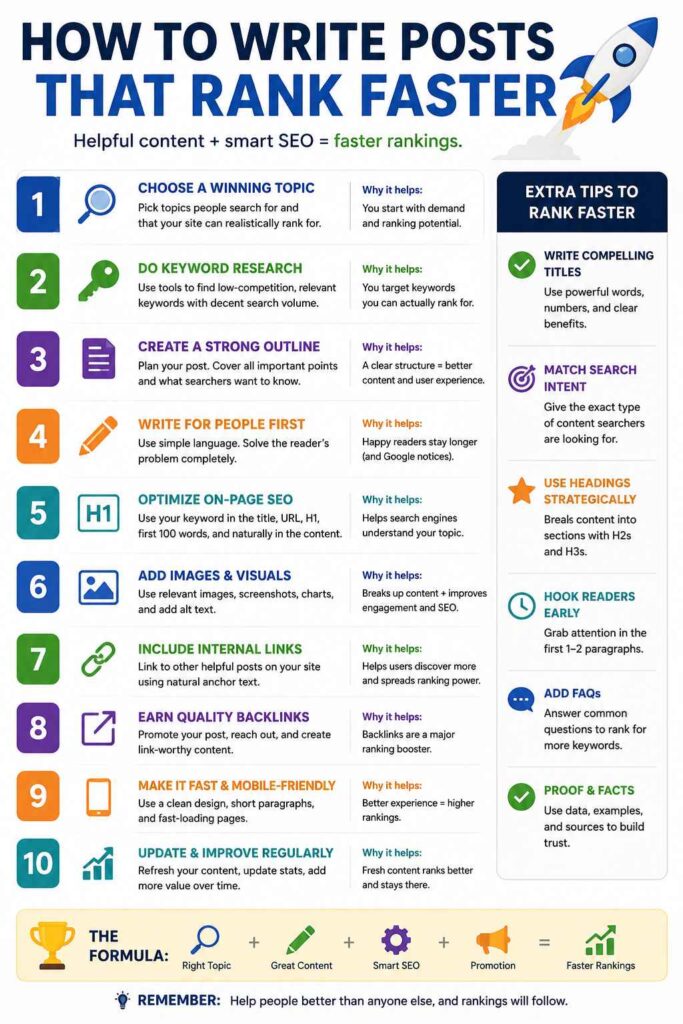
Good SEO writing starts with the answer. Put the main point near the top, then use the rest of the post to explain it clearly. Readers should not have to dig for the solution.
Clear headings help a lot here. Break the post into sections that match what the reader wants to know, then add related terms naturally as you explain each point. You do not need to force keywords into every paragraph. You just need to write in a way that covers the topic fully.
One useful post is better than several thin ones. A strong article that answers the question well can rank, earn clicks, and keep growing over time. Thin posts tend to fade fast because they do not give search engines or readers much reason to stay.
Also, keep updating your posts later. Add new examples, fix outdated links, and improve weak sections once you see how the page performs in Google Search Console. That extra polish can help a post climb without starting over.
A good blog post for affiliate traffic should do three things:
- Answer the search intent early.
- Stay clear and easy to scan.
- Give the reader a next step that makes sense.
Simple blog post types that convert well
Some post formats work better for affiliate links because they match buyer intent. You do not need fancy content. You need the right format for the right search.
Best-of lists are a strong start because they help readers compare options fast. A post like “best free email tools for beginners” gives you room to explain each option and place affiliate links where they fit naturally.
Product comparisons work well too. If someone is already weighing two tools, your job is to help them choose. That makes the affiliate link feel like part of the answer, not a sales pitch.
Beginner guides also convert nicely. These posts bring in people who need setup help, and they often need tools along the way. A guide about starting a niche site, building a Pinterest workflow, or picking a keyword tool can point to useful products without sounding forced.
Problem-solving posts are another smart option. They match search intent closely and often bring in readers who want a quick fix. Examples include:
- “How to get clicks on affiliate links”
- “Why your blog post is not ranking”
- “Best free tools for keyword research”
- “How to write a product review that feels honest”
The best part is simple. These formats make sense to readers first, and that is why they work for affiliates. When your post helps solve a real problem, the link feels helpful too.
If you keep publishing useful posts around the same niche, your blog starts building momentum. One article brings search traffic, the next one supports it, and soon your site feels less like a page and more like a growing library of answers.
To map out the exact posts you need for your first month, this first affiliate content plan gives you a complete week-by-week publishing schedule.
Pinterest Traffic That Can Bring You Clicks Without a Big Following
Pinterest works differently from most social platforms. People open it with intent, not just to scroll. They search for ideas, products, and fixes, which means your content can show up even if your account is small.
That makes Pinterest a strong fit for free traffic methods for affiliate beginners. You do not need a big audience to get started. You need clear pins, a useful topic, and a page that matches what people want to see.
Why Pinterest can work before you have a big audience
Pinterest is closer to a visual search engine than a follower-first feed. A pin can keep getting shown for weeks or months if it matches a search term and gets decent engagement. That gives you a real shot at traffic without spending money or building a huge profile first.
A small account can beat a larger inactive one because Pinterest cares more about relevance than follower count. If your pin answers a question or solves a problem, it can still get seen. For example, a simple pin about “easy budget meal prep” can outperform a dormant account with thousands of followers but no fresh content.
This is where Pinterest helps beginners. You can post helpful pins, link them to strong content, and let the platform do the discovery work. One good pin can keep sending clicks long after you publish it.
On Pinterest, search intent matters more than follower size.
Best niches for Pinterest traffic
Some niches do better on Pinterest because they are visual, aspirational, or problem-solving. If your topic fits one of those buckets, you have a better chance of getting clicks.
The strongest niches usually include:
- Make money online: side hustles, affiliate tips, work-from-home ideas
- Health and fitness: workouts, meal prep, wellness routines
- Fashion: outfits, seasonal looks, accessories
- DIY and crafts: home projects, decor, handmade ideas
- Motivation: habits, routines, goal-setting content
- Personal finance: budgeting, saving money, debt payoff tips
- Home: organization, cleaning, room makeovers
- Productivity: planning systems, study tips, time management

These topics work because they give people a clear before-and-after result. Someone wants a better room, a better body routine, more money, or a faster way to get organized. That is a strong match for affiliate content, because you can point them to tools, products, and guides that help.
If your niche is visual or tied to a clear problem, Pinterest is easier to grow. If it is not, you may need to get more creative with the angle. A plain topic can still work, but the pin has to promise a specific result.
How to make pins that get noticed and clicked
Your pin design does not need to be fancy. It does need to be clear. Use Canva or a similar tool, keep the layout simple, and make the title easy to read at a glance.
Vertical images usually perform better because they fill more space in the feed. Pair that with bold text, high contrast, and one clear idea per pin. A busy pin feels like noise. A clean pin feels like help.
A simple formula works well:
- Use one main image that fits the topic.
- Add a short, clear title.
- Keep the text large enough to read on mobile.
- Match the pin to the exact content on the page.
- Post regularly so Pinterest has more content to test.

Testing matters too. You can make several pins for the same post and change the image, headline, or color style. One version might get ignored, while another gets steady clicks. That is normal, so treat each pin like a different angle on the same topic.
Start by linking pins to your best content first. If you have a blog post, guide, or product page that already answers the search well, send traffic there. A strong destination gives your pin a better chance of converting. A weak page wastes the click, even if the pin looks good.
Posting consistently matters more than posting in bursts. Pinterest rewards fresh content over time, so keep adding pins instead of waiting for one perfect design. The more useful pins you create, the more chances you have to get discovered.
When you treat Pinterest like a search tool, not just a social app, it becomes much easier to use. You do not need fame. You need a clear offer, a useful pin, and a topic people already want.
Short-Form Video When You Want Faster Free Reach
Short-form video is one of the fastest ways to get free attention when you are starting out. It is quick to consume, easy to share, and built for people who live on their phones.
That matters because mobile users want a clear point fast. If your video answers one question, shows one product, or solves one problem, it can reach people who would never find your blog through search alone. For free traffic methods for affiliate beginners, that makes short video worth your time.
Why short videos are getting attention right now
Short videos fit how people browse now. A viewer can watch a clip in seconds, react right away, and move on without a big time commitment. That makes the format easy to push, easy to save, and easy to send to someone else.
Recent marketing data also shows that clips in the 15 to 90 second range perform well for product demos, quick tips, and simple reviews. You do not need a long script. You need a sharp hook, one useful point, and a reason to keep watching.

This format works especially well on mobile because it feels natural in the feed. A short clip is like a quick tap on the shoulder, not a full sales pitch. You can reach people who are not searching for your blog, yet they still have the same problem you solve.
It also spreads well because people share short clips without much effort. If the video is useful, funny, or surprising, they pass it along fast. That gives you free reach without needing a large audience first.
Easy content ideas you can film this week
You do not need a big setup or fancy gear. Start with simple videos that show real value in a clear way. If you can explain it in one minute, you can probably film it this week.
A few beginner-friendly ideas work well again and again:
- Show a tool: Open a free tool you use and point out one thing it does well.
- Share a quick tip: Give one short fix for a common problem, like better titles or stronger hooks.
- Compare two products: Explain which one is better for beginners and why.
- Answer one question: Pick one thing people keep asking in your niche.
- Explain one mistake: Show what not to do, then give the better option.
For example, you might film a 30-second clip about the best free keyword tool for new bloggers. Or you could compare two budget microphones and say which one is easier for voice-over work. Those videos are simple, but they still help people decide.

Keep the first version plain. A clean talking-head clip, a screen recording, or a product demo is enough. You can always improve later once you see what people respond to.
How to share affiliate links the right way
Your link should fit the platform, not fight it. On some apps, a link in the bio works best. On others, a description, pinned comment, or landing page gives you more room to explain the offer.
Use the setup that matches the platform and the content:
- Put the link in your bio when the platform limits link placement.
- Add it to the description when viewers expect more details there.
- Pin a comment if the platform allows it and the link needs more visibility.
- Send traffic to a landing page when you want to share several offers or collect emails first.
Always disclose that you may earn a commission. A short line like “This post contains affiliate links” keeps things clear and honest. You do not need a long disclaimer, but you do need plain language.
Keep the video helpful first, then let the link do its job.
Avoid stuffing the clip with sales talk. If every sentence sounds like a pitch, people swipe away. A better approach is to show the result, explain the benefit, and let the link offer the next step.
Free editing apps that make posting easier
Editing does not need to slow you down. Simple tools help you trim clips, add text, and post faster without learning a complicated workflow.
These beginner-friendly apps are a solid place to start:
- CapCut: Easy for short-form video, quick captions, simple cuts, and mobile editing.
- DaVinci Resolve: Great if you want a free desktop editor with more control later.
- Shotcut: Good for basic edits when you want something lightweight and free.

CapCut is usually the fastest pick if you want to post right away. DaVinci Resolve gives you more room to grow, and Shotcut is a solid no-frills option when you only need the basics. The best editor is the one you can open, use, and finish with.
If you want momentum, keep your edit process simple. Cut the dead space, add clear captions, and export. Then post before you overthink it. Short-form video rewards speed, clarity, and consistency more than polish.
Communities Like Facebook Groups, Quora, and Reddit Can Bring Targeted Traffic
When you want free traffic methods for affiliate beginners, communities can send you people who already care about your topic. That is the real advantage. You are not shouting into a crowd, you are joining conversations where the problem already exists.
The best results come when you act like a helpful member first. Answer questions, share context, and speak to the exact issue behind the post. When you do that well, clicks feel earned because trust comes first.

How to add value without sounding spammy
Start by answering the full question, not just the part that helps your link. If someone asks how to fix weak blog traffic, give the steps, the mistake to avoid, and the simple tool or method that helps. Your affiliate product should appear only when it truly solves the problem.
That usually means you write like a peer, not a pitch. You can explain your own process, mention what worked for you, and point to a resource when it adds clarity. If the product is only there to sell, skip it.
A good rule is simple:
- Give the main answer first.
- Add one useful detail that most people miss.
- Mention a product only if it makes the next step easier.
When you lead with value, people stop seeing you as a promoter. They start seeing you as someone who knows the subject and respects their time. That is what earns trust, and trust is what earns clicks.
If your reply still helps after you remove the link, you are probably on the right track.
How to build authority inside groups and forums
Authority comes from repetition and specificity. You do not need a big profile or a long bio. You need to show up often and give answers that sound like you have actually done the work.
Stick to one or two communities at first. Then comment, answer, and join discussions on a regular schedule. People notice when your name keeps appearing with useful replies, especially when those replies solve real problems instead of repeating the obvious.
Be specific whenever you can. “Use better content” sounds vague. “Write one post for each buyer question, then link it to a short comparison page” sounds like real help. Specific advice gets saved, quoted, and remembered.
A simple way to build that trust is to focus on three habits:
- Show up often enough that people recognize your name.
- Give direct answers with examples.
- Stay on topic and respect the culture of the group.
That approach works in Facebook Groups, Quora, and Reddit because each platform rewards people who act like members first. Once you have that trust, your recommendations feel natural instead of forced.
Mistakes that can get you ignored or banned

Most beginners lose traffic because they move too fast. One spammy post can kill your account fast, and in a small community, that damage spreads even faster.
Avoid posting the same link everywhere. It looks lazy, and moderators notice. You also need to read the rules before you post, because many groups ban affiliate links, self-promo, or repeated promotions without warning.
Other mistakes are easy to spot:
- Sounding too salesy in your first post.
- Replying without reading the full question.
- Dropping a link before you have built any trust.
- Copying the same comment into every thread.
- Ignoring replies after people ask follow-up questions.
Reddit is especially strict, but Facebook Groups and Quora can shut you out just as fast if you act like a bot. Keep your tone useful, keep your links selective, and keep your profile clean. One careless move can undo a week of good work.
The better play is patience. Spend time in the community, answer well, and let your link support the conversation. That is how you turn communities into one of the most reliable free traffic methods for affiliate beginners.
Email List Building That Helps You Turn Free Traffic Into Sales
Free traffic gets people to notice you. Email helps you turn that attention into repeat clicks and sales. When someone joins your list, you get a direct line to their inbox, where you can keep helping them long after the first visit.
That matters because free traffic is often scattered. Some people find you through search, others through Pinterest, video, or a community post. Email pulls those visitors into one place, so you can follow up with useful tips, product picks, and simple next steps without starting over each time.
Why email is still worth building from day one
Email gives you control that social platforms never will. You can talk to people directly, send more than one recommendation, and build a real relationship instead of hoping they come back on their own.
It also makes every other free traffic method stronger. A blog post can send readers to your list. A Pinterest pin can do the same. A short video can point people to a freebie, then your emails can do the selling later. In other words, email connects all your traffic pieces into one system.
That is why beginners should start collecting subscribers early, even with a tiny audience. If 50 people join your list, that is 50 people you can reach again. If you only rely on one post or one platform, you have to keep chasing new clicks.
Recent email marketing data also backs this up. Email can return strong results, and welcome emails often perform better than regular newsletters. That makes your list one of the best places to send warm traffic before you promote any affiliate offer.
If you build the list early, each free traffic method has somewhere to send people next.
Free tools you can use to start collecting subscribers
You do not need fancy software to begin. Simple tools are enough when you are just trying to collect your first subscribers and send a basic welcome message.

These beginner-friendly options work well:
- Mailchimp: Good for simple signup forms and basic email automation.
- Brevo: Helpful if you want a free plan with email tools and room to grow.
- Substack: Easy to use if you want to publish emails like short posts.
Pick the tool that feels easiest to use, not the one with the most features. A clean signup form and one welcome email are enough to get started. Fancy software does not matter if you never use it.
Simple lead magnet ideas for beginners
A lead magnet only needs to solve one small problem. If it saves time or removes confusion, it can work. You are not building a giant course here, you are giving people a quick reason to join your list.

Easy ideas include:
- Checklist: Give readers a short step-by-step list they can use right away.
- Short guide: Share a simple PDF that explains one task clearly.
- Resource list: Curate helpful tools, sites, or apps in one place.
- Template: Save them time with a fill-in-the-blank post, email, or pin idea.
- Cheat sheet: Condense one process into a quick reference page.
For example, if you talk about affiliate blogging, you could offer a “first 10 post ideas” cheat sheet. If you focus on Pinterest, you could give away a pin title template. Keep it small, useful, and easy to finish in one sitting.
How to keep emails helpful instead of pushy
Your emails should give value first and sell second. If every message feels like a pitch, people stop opening them. If every message teaches something useful, they keep reading and trust your recommendations more.
A simple pattern works well:
- Share one tip or quick win.
- Add a short story or example.
- Mention one relevant affiliate product when it fits.
That format keeps your emails natural. For example, you might show how you found a better blog title, explain why it worked, then mention the keyword tool that helped. The product makes sense because it supports the lesson.
You can also keep your tone light and direct. Write like you are helping a friend who wants the same result. When the advice feels useful, the recommendation feels earned.
Focus on one clear action per email. Ask the reader to read a post, try a tool, or check out a guide. Small steps often convert better than long sales messages because they feel easy to follow.
The Fastest Results Often Come From Combining Two Free Traffic Sources
The quickest wins usually come when you stop relying on one channel alone. One source gives you reach, while the second source helps you stretch that reach, capture interest, or bring people back later.
That is why free traffic methods for affiliate beginners work best in pairs. A blog post can feed Pinterest, a short video can feed email, and SEO can be backed up by community answers. Each source does a different job, so you get more chances to be seen without adding cost.
One traffic source gets attention. The second one helps you keep it.
Blogging plus Pinterest for long-term and visual traffic
A single blog post can do far more than sit on your site. You can turn that one piece into several Pinterest pins, each with a different headline, image, or angle. That gives the same content multiple entry points, which means more chances to get clicks.
For example, if you publish a post about the best beginner tools in your niche, you can make one pin for each tool, one pin for a comparison, and one pin for a quick tip. Each pin sends people back to the same post, but each one attracts a slightly different reader.

This combo works well because both platforms support long-term traffic. Blogging gives you a home base that can rank in search, while Pinterest keeps your content moving in a visual feed. As a result, one post can keep bringing visitors long after the day you publish it.
You can also test what message gets the most attention. Maybe one pin about “best free tool” gets more clicks than another pin about “easy beginner setup.” That tells you what angle people care about most, and you can use that insight in future posts too.
A simple workflow looks like this:
- Write one helpful blog post around a problem people search for.
- Pull out three to five useful ideas from that post.
- Turn each idea into a separate Pinterest pin.
- Link every pin back to the same article.
- Watch which pin style gets the most saves and clicks.
This is one of the smartest free traffic methods for affiliate beginners because it compounds. You are not creating more work each time, you are reusing one strong asset in a way that keeps paying off.
Short videos plus email for faster attention and repeat visits
Short-form video is good for quick attention. Email is good for follow-up. Put them together, and you get a simple system that brings people in fast and keeps them coming back.
A short video can introduce one useful idea, one product, or one result. Then email helps you continue the conversation after the first view. Instead of hoping the viewer remembers you later, you give them a place to join your list and hear from you again.

This works because short video is built for speed. People can watch in seconds, then decide if they want more. If your clip solves a small problem or shows a clear result, the next step feels natural. Email then gives you room to explain the offer, share a tip, or send a second recommendation later.
The two channels feed each other well. A video can point viewers to a free checklist, a mini guide, or a signup form. Once they join your list, you can send them back to your blog post, a product review, or a related affiliate offer. That turns one view into several touches.
You do not need a complicated setup. Start with one clip that answers a common question, then connect it to one simple lead magnet. Keep the message clear, and make the next step easy.
A good pattern is this:
- Use the video to create interest.
- Use the lead magnet to earn the email signup.
- Use email to build trust and send repeat traffic.
That pairing is especially useful when you want faster results. Short videos can bring the first click, while email helps you make that click count more than once.
SEO plus community answers for extra reach
SEO and community answers work well together because they serve the same topic in two different places. Your blog post gives you search traffic over time, while Quora or Reddit answers give you another way to get discovered right now.
This combo also helps you build topical authority. When you write a blog post, then answer related questions in a forum or Q&A site, you start covering the topic from more than one angle. That gives readers more ways to find you and shows that you understand the subject well.

For example, if your blog post covers beginner keyword research, you can answer a Quora question about how to find low-competition keywords. If someone on Reddit asks how to get affiliate clicks without ads, you can share a short, helpful reply that points to your blog for the full breakdown.
That gives you extra entry points for traffic. Some people will find you through Google, others through a community thread, and a few will click from both. The more useful places you appear, the more trust you build around the same subject.
Use the same core topic across both channels, but change the format. Your blog post can go deep, while your community answer stays short and direct. That makes your content work harder without sounding repetitive.
If you want faster growth, pick one blog topic and one community platform, then keep them aligned. The post brings structure, and the answers bring visibility. Together, they create a stronger path to clicks than either one can deliver alone.
The Common Mistakes That Slow Down Affiliate Beginners
Free traffic works best when you keep things simple and stay patient. Many beginners do the opposite, then wonder why their posts, pins, or videos do not move fast enough. The problem is usually not the method, it is the way you use it.
If you want more clicks and better results, focus on fewer offers, give your traffic time to build, and watch what people actually respond to. Small changes here can save you months of guessing later.
Trying to promote too many products at once
When you promote too many offers, your content starts to feel crowded. Readers do not know what to focus on, and your message loses strength. One clear recommendation is easier to trust than a list of random links.
A beginner often thinks more products mean more chances to earn. In reality, the opposite usually happens. Your post gets thinner, your hook gets weaker, and your audience feels like you are trying to sell instead of help.

Start with a small set of relevant products. If your content is about beginner blog tools, choose one hosting option, one keyword tool, and one email tool. That keeps your advice focused and makes it easier for readers to follow your path.
A simple setup works better than a messy one:
- One main offer for the core problem
- One backup option for readers who want a lower-cost choice
- One support tool that makes the process easier
This approach gives your content a clean message. You look more helpful, and your affiliate link feels like part of the solution, not a hard sell.
Giving up before the traffic has time to grow
Free traffic usually builds slowly at first. Search posts need time to rank, Pinterest pins need time to spread, and short videos need repeat posting before they find the right audience. If you quit after a few days, you stop right before things can start moving.
Consistency matters more than perfect results in week one. A weak start is normal. What matters is whether you keep publishing, refining, and showing up long enough for the platform to test your content.
Many beginners expect fast wins because paid ads and viral clips make growth look instant. Organic traffic does not work that way. It behaves more like planting seeds, because the early work is small but the payoff comes later.
Your first week is for learning, not for judging the whole strategy.
Keep a simple rhythm and let it play out. Post on a schedule you can maintain, then give each piece time to breathe before you change direction. If one post gets a few clicks and another gets none, that is useful data, not failure.
The real mistake is restarting every time results feel slow. When you stay consistent, you give your content a chance to stack up and pull in traffic over time.
Ignoring data and repeating weak content
If you do not track what performs, you end up guessing forever. That slows you down because you keep making the same weak content and expecting a different result. Free traffic grows faster when you pay attention to what people click, save, comment on, and sign up for.
You do not need a complicated tracking system. A simple spreadsheet can show which posts, pins, or videos brought traffic. Add basic columns for the title, platform, clicks, saves, comments, and signups. That alone can show patterns you would miss otherwise.
Pay attention to what people respond to most:
- Clicks tell you what grabs attention.
- Saves show what people want to keep.
- Comments reveal what starts conversation.
- Signups show what builds trust and interest.
Once you see a pattern, do more of that. If a comparison post gets clicks, write another comparison. If a short video gets saves, make more videos with the same angle. If a topic brings no movement after repeated tries, change the topic or format.
The goal is not to keep guessing. The goal is to spot what works and repeat it with better focus. That is how you turn scattered effort into steady growth.
Conclusion
You don’t need ad money to get moving. You need a clear plan, useful content, and the patience to let free traffic build.
SEO blogging, Pinterest, short-form video, communities, and email all work better when you use them with focus instead of chasing everything at once. The strongest results come when you stay consistent, keep improving what gets clicks, and treat each post like an asset that can bring people back again.
Pick one traffic source, post consistently for the next 90 days, and give it time to work.
Frequently Asked Questions About Free Traffic Methods for Affiliate Beginners
What is the best free traffic method for affiliate beginners?
The best option depends on your strengths, but SEO blogging is the strongest choice for long-term traffic. Pinterest and short-form video can move faster if you want earlier reach, while communities like Reddit or Quora work well if you can answer questions clearly. Start with one method, then stay consistent long enough to see what gets clicks.
Can you make affiliate sales without a website?
Yes, you can start without a website. Pinterest, YouTube Shorts, Quora, Reddit, and email tools can all send traffic to your offers or to a simple landing page. A website helps with search traffic later, but it is not required for your first test.
How long does free traffic take to work?
Free traffic usually takes time to build. Search posts and Pinterest pins often need weeks or months to gain traction, while short-form video and community answers can move faster if the content fits the audience well. The best results come from regular posting and clear tracking.
How do you promote affiliate links without getting banned?
Promote links only when they fit the question or problem being discussed. Follow each platform’s rules, disclose affiliate links clearly, and avoid repeating the same promotion in every thread or post. Helpful content first, link second, keeps your account safer and your clicks more trustworthy.
Should beginners combine more than one free traffic source?
Yes, combining two channels often works better than relying on one. A blog post can feed Pinterest, a video can feed email, and community answers can point people to your main content. That gives you more ways to get seen without adding cost.
Affiliate Disclosure (FTC Compliant)
In accordance with the Federal Trade Commission’s guidelines, please assume that some of the links on this website are affiliate links. This means that I may earn a commission if you click on a link and make a purchase, at no additional cost to you.
As an affiliate, I only promote products and services that I have either used personally or thoroughly researched and believe will add value to my readers. Any compensation received does not influence the content, topics, or recommendations made on this website.
I am a participant in various affiliate advertising programs, including but not limited to programs designed to provide a means for websites to earn advertising fees by advertising and linking to products or services.
Please understand that your decision to purchase any product or service is entirely your own responsibility, and you should conduct your own due diligence before making any financial decisions.
If you have any questions regarding this disclosure, feel free to contact me.
Thank you for supporting this website.
This Post is Last Updated On May 11,2026
About The Author
