Key Takeaways
- Start with one niche, one reader, and a simple 30-day publishing rhythm.
- Focus on low-competition, long-tail topics that match beginner intent and buying intent.
- Mix guides, comparisons, tutorials, and product articles so affiliate links feel useful, not forced.
- Improve the posts you already published before adding more, and track which topics get clicks.
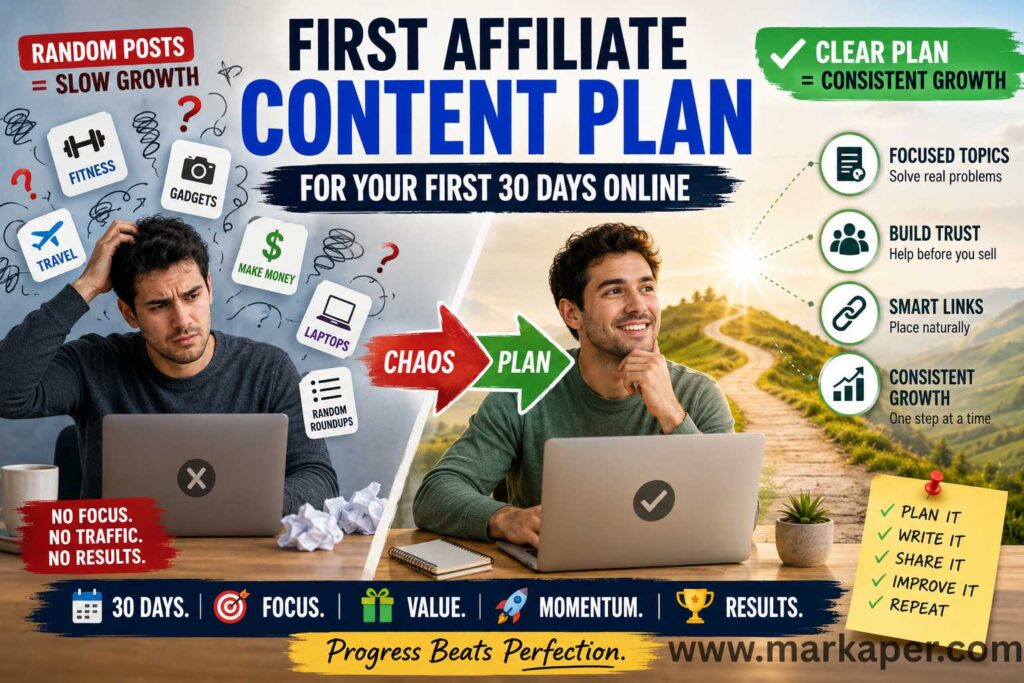
If you keep posting random affiliate content and hoping something sticks, your first month gets messy fast. Your first affiliate content plan should give you a simple system you can repeat, because consistency matters more than fancy design or trying to sell too early.
That means you focus on the right kind of posts, the ones that build trust and give people a reason to keep reading. If you want a broader view of beginner-friendly income paths too, you can compare legit ways to make money online, but this roadmap stays on one clear track for your first 30 days. Next, you’ll map out what to publish, how to keep it manageable, and how to avoid the mistakes that keep new sites stuck.
Why Most Beginner Affiliate Sites Never Grow
Your first affiliate content plan only works when each post pushes the same site in the same direction. Most beginner sites never grow because they treat publishing like a pile of separate tasks instead of a focused path.
That creates weak signals for both readers and search engines. If you want traffic, trust, and early clicks, every page needs a job.
Posting Without a Strategy
Random topics make your site feel noisy. One day you write about kitchen gadgets, then fitness gear, then email tools, and nothing connects.
Readers notice that fast. They land on one post, then wonder what your site is actually about. Search engines notice it too, because your content does not build a clear niche or show a clear reader problem.
A better path is simple. Every post should support one niche and one kind of visitor. If your site is about affiliate marketing for beginners, your articles should help the same person with the same goal.
For example, scattered content looks like this:
- a post about dog training tools
- a post about travel credit cards
- a post about laptop stands
- a post about random “best products” roundups
A focused path looks like this:
- a beginner guide to affiliate content
- a comparison of starter tools for creators
- a tutorial on choosing low-competition topics
- a review that solves one clear problem
That second path is easier to trust. It also gives your site a stronger theme, which makes each new article support the last one instead of competing with it.

Choosing Hard Keywords Too Early
A lot of beginners aim too high in month one. They target huge terms that already belong to big sites, then wonder why nothing ranks.
That usually slows you down before you even get started. A new site has a better shot with low-competition, long-tail topics that match buyer intent and match your niche. If you need a realistic example, a phrase like “best budget running shoes for beginners” is far better than a broad term like “best shoes.”
You do not need giant search volume to get moving. You need a topic you can actually rank for, answer well, and connect to a useful offer. That is how you build early traction without wasting weeks on dead-end pages.
If you want a simple month-one target, keep your keywords close to real problems. Look for:
- beginner questions
- product comparisons
- “best for” searches
- pain-point searches
- use-case searches
Slow wins are normal here. In fact, they are expected. A small site often grows by stacking a few helpful pages, then improving as the search signals get stronger.
Your early goal is not to beat giant sites. Your goal is to publish pages you can actually compete with.
If you want a realistic starting point, the plan to make your first $100 with affiliate marketing is a better model than chasing broad, crowded keywords on day one.

Writing Only Promotional Content
Beginners often think every post should push a product. That usually backfires. If every page sounds like an ad, people stop trusting your site, and they stop clicking too.
You need balance. Helpful guides build trust. Comparison posts help readers sort options. Affiliate-focused articles can close the gap when the reader is ready to choose.
A simple mix works better than constant selling:
- Helpful guides explain the problem and give real steps.
- Comparison posts show differences between two or three options.
- Affiliate articles recommend a product when the fit is clear.
That mix keeps your site useful. Readers feel helped first, then sold to later. That order matters because people rarely buy from a site that talks about itself too much.
The easiest rule is this, answer the question before you ask for the click. If your post teaches, compares, or solves something real, the affiliate link feels natural. If it just pushes a product, the page feels thin.

A beginner site grows when you stop posting at random, choose realistic topics, and publish content that helps before it sells. That mix gives your first affiliate content plan a real chance to work.
What Your First 30 Days Should Actually Focus On
Your first month is not about building a huge site or posting nonstop. It is about creating a base you can grow, getting search engines to understand your topic, and learning what your readers actually care about. If you keep that focus, your first affiliate content plan stays simple instead of turning into a pile of unfinished ideas.
You do not need perfect design or a giant content calendar. You need a few solid pages, a clear publishing rhythm, and enough feedback to see what gets attention. If you are starting without a blog, the same mindset still works, and a 30-day affiliate marketing plan without a website can follow the same publish, watch, and improve approach.
Build a Small Content Foundation
Your first posts should give your site a spine, not a giant library. Pick a few topics that cover the main problems in your niche, then make each page useful enough that a real person would stay.
A simple starter set might include:
- one beginner guide that explains the main problem
- one comparison post that helps people choose
- one review or tutorial that solves a narrow need
That is enough to make your site feel real. It also gives readers clear paths between posts, which matters more than volume in month one.

Keep the pages connected around one niche and one type of reader. For example, if you write about beginner tools for creators, your first pages can cover setup, comparisons, and one clear buying decision. That feels focused, and focus helps people trust you faster.
Earn Search Trust Over Time
Search engines need time to read your site properly. They want to see clear topics, useful structure, and a steady publishing pattern before they treat you like a source worth ranking.
That means you should keep your titles clear, your headings simple, and your articles on the same theme. Quick tricks usually waste time, but consistent publishing gives you something much better, which is a site that makes sense on the page and in search.
A small, steady plan works well:
- Publish on a regular schedule you can keep.
- Use one topic per page.
- Write for a clear reader problem.
- Update weak posts instead of starting over.
Consistency matters more than noise. A new site that posts three focused articles each week usually looks stronger than one that drops ten random pages and disappears.
Learn What People Actually Want
Your first month is also research, even if it does not feel like it. As you publish, you start seeing which questions repeat, which posts get clicks, and which topics people ignore.
That is where your plan gets sharper. If one comparison post gets more interest than a general guide, you know what to make next. If readers keep asking the same beginner question, that question should probably become a full article.

Pay attention to simple signals:
- which titles get the most clicks
- which topics hold attention
- which posts lead to the next page
- which questions keep showing up in comments or messages
That feedback is gold for a beginner. It tells you where to spend your next hour instead of guessing.
If you want to use AI for topic sorting or draft outlines, keep it as support, not the whole process. A practical guide to making money online with AI can help you move faster, but your own judgment still matters most.
By the end of the first 30 days, you should have a small content base, a clearer niche, and a better feel for what readers want. That is the real win, because it gives your next month a direction instead of a guess.
Week 1, Build Your Foundation
Your first week sets the tone for the whole plan. You are not trying to rank for everything yet, and you are not trying to publish just to stay busy. You are setting up a site that has a clear purpose, a clean structure, and enough useful content to make people stay.
That matters because a strong first affiliate content plan starts with focus. When your site feels clear from day one, every post you write after that gets easier to shape and easier to connect. If your topic leans toward AI tools or creator services, AI freelancing for beginners is a good example of how a narrow niche gives you a cleaner path.
Choose One Clear Niche
Start with one audience and one main problem. That might be new bloggers who want to earn through affiliate links, students looking for side income, or creators who need simple tools to grow faster.
The goal is to make your site feel like it was built for one type of reader. That helps you write faster because you stop guessing what to cover. It also helps you rank more easily because your pages support one topic instead of drifting across five.
Broad sites slow beginners down. They make your content harder to plan, harder to connect, and harder to monetize later. A narrow niche gives you a better shot at useful content that matches real search intent.
A simple way to narrow it down is to ask yourself:
- Who do you want to help?
- What problem do they want solved first?
- What kind of content can you write about often?
If you can answer those three questions, you already have a better niche than most beginners. Keep it small enough to manage, because small is what gets published.

A focused niche makes your site easier to write, easier to rank, and easier to turn into income later.
Create the Basic Pages Your Site Needs
Before you get too deep into content, set up the pages that make your site look real. You only need a few basics, but they matter more than most beginners think.
Your must-have pages are:
- About page, so readers know who the site is for.
- Contact page, so people can reach you.
- Privacy Policy page, so the site looks complete and trustworthy.
These pages help people feel safe on your site. They also show that you are taking the project seriously, even if you are just getting started.
Keep the About page simple. Say who you help, what the site covers, and why you started it. The Contact page can be basic, even just an email form. The Privacy Policy does not need to be fancy, it just needs to be there.
Think of these pages as the frame around your content. Without them, the site feels unfinished. With them, even a small site looks more believable.
A quick setup here saves you trouble later. It also gives visitors a reason to trust your content before they ever click an affiliate link.
Publish Your First Three Articles
Once the site has a clear niche and basic pages, publish your first three articles. Keep them simple, helpful, and easy to follow. You are trying to answer real questions, not write sales copy.
A strong starter set usually includes:
- a beginner guide that explains the main topic
- a problem-solving article that answers one common question
- a basic tutorial that shows how to do one useful task
This mix works because each post has a job. One builds context, one solves a pain point, and one gives the reader a clear next step. Together, they make your site feel useful instead of promotional.
Use real search questions as your guide. For example, you might write about how to choose affiliate tools, how to start with one niche, or how to set up a first content calendar. Those topics give readers something concrete, and they give you a better base for future affiliate links.

Keep the tone helpful, not pushy. If your article sounds like it exists only to send people to a product, you lose trust fast. If it answers a question first, the affiliate part feels natural later.
Your first week should leave you with one niche, three basic pages, and three useful articles. That is enough to give your site structure, direction, and a much better chance of growing in the next phase.
Week 2, Start Publishing Helpful Content
Week 2 is where your first affiliate content plan starts to feel real. You already set the foundation, so now you need pages that answer simple questions and help readers take the next step.
Keep the tone useful, plain, and specific. If a post would help a beginner save time, avoid a mistake, or compare options, it belongs here.
Write Low-Competition Articles
Look for topics a new site can actually compete for. That usually means long-tail phrases, narrow problems, and beginner questions tied to everyday affiliate niches like fitness gear, home office tools, budget software, or starter beauty products.
For example, you can write about “best budget desk chair for small spaces,” “how to choose a cheap email tool,” or “easy protein shaker options for beginners.” These topics are easier to rank for because they solve one clear problem.

If the topic feels too broad for a new site, it probably is.
Match Each Post to Search Intent
Each article should solve the exact problem the reader has in mind. Informational posts teach something, comparison posts help readers choose between options, and buying intent posts help them make a purchase decision.
That match matters because readers stay longer when the page fits what they searched for. A beginner asking “how does this work” wants a guide, while someone searching “best” or “vs” wants options.

Publish Comparison or Best Posts
Comparison posts often work well early because the reader is already looking for help choosing. That includes posts like best tools, best beginner products, alternatives, and simple side-by-side comparisons.
Keep them balanced. Point out where each option fits best, where it falls short, and who should skip it. That way, your content feels useful instead of salesy.

The goal this week is simple, publish content that helps before it sells. If you do that consistently, your site starts building trust one article at a time.
Week 3, Add Affiliate Content Without Sounding Pushy
By week 3, you already have enough structure to start adding affiliate content with more purpose. The goal now is simple, you want your links and product mentions to feel like part of the help you’re giving, not a sales pitch tacked onto the end.
If you do this well, your first affiliate content plan starts turning into a real system. You are still teaching first, but now you are also pointing readers toward useful products, tools, and choices that match what they need.
Place Affiliate Links Where They Fit Naturally
Your best affiliate links go where the reader is already making a decision. That usually means product mentions, recommendations, tutorials, and comparison sections. When the link helps the reader take the next step, it feels useful. When it interrupts the flow, it feels forced.
A simple rule helps here. If you would still mention the product without the commission, the link probably belongs there.
Use links in places like these:
- a tool you recommend after explaining a problem it solves
- a product section where you compare features
- a step in a tutorial where the reader needs a specific tool
- a “best for” section where you explain who each option fits
Keep your wording plain. Say “the tool I use for keyword research” or “the budget option that works for beginners” instead of pushing hard with sales language. That small shift makes the page sound like a recommendation, not an ad.

Your disclosure should stay clear too. Put it where readers can see it, then move on with the content. You do not need to keep repeating it in every paragraph.
If the link helps the reader decide faster, it belongs. If it only helps you sell, leave it out.
Create Product-Focused Articles
Product-focused articles work well because they match real buying intent. A reader searching for a tool, product, or solution already wants help choosing, so your job is to answer the question clearly.
These articles should still do more than push a recommendation. You need to explain what the product does, who it is for, what it does well, and what type of reader should skip it. That keeps the content balanced and useful.
A good product article usually includes:
- The main problem the product solves.
- A short comparison with other options.
- A simple recommendation for the right type of reader.
- A few honest pros and cons.
That structure keeps you from sounding one-sided. It also helps readers trust your judgment, because you are not pretending every product is perfect.
You can write these posts around starter tools, beginner-friendly software, or everyday items your audience already searches for. For example, if your site helps new creators, you might compare email tools, writing tools, or simple SEO tools. The topic stays narrow, and the article stays easy to read.
The key is to be specific. Tell readers what the product is good at, where it falls short, and who gets the most value from it. That kind of honesty sells better than hype because it sounds like real advice.
Start Internal Linking Across Your Posts
Once you have a few posts live, start connecting them. Internal links help readers move through your site without getting lost, and they help your content work as a group instead of a pile of separate pages.
This matters more than many beginners think. A reader who lands on one post should have a clear next step, whether that is a guide, a comparison, or a supporting article. That path keeps people on your site longer and gives your pages more context.
A simple linking pattern works best:
- link a beginner guide to a comparison post
- link a product review back to a broader tutorial
- link a supporting article to the main topic page
You do not need to overload every post. A few relevant links usually do more good than a wall of them. Keep each one tied to a real question the reader may have next.
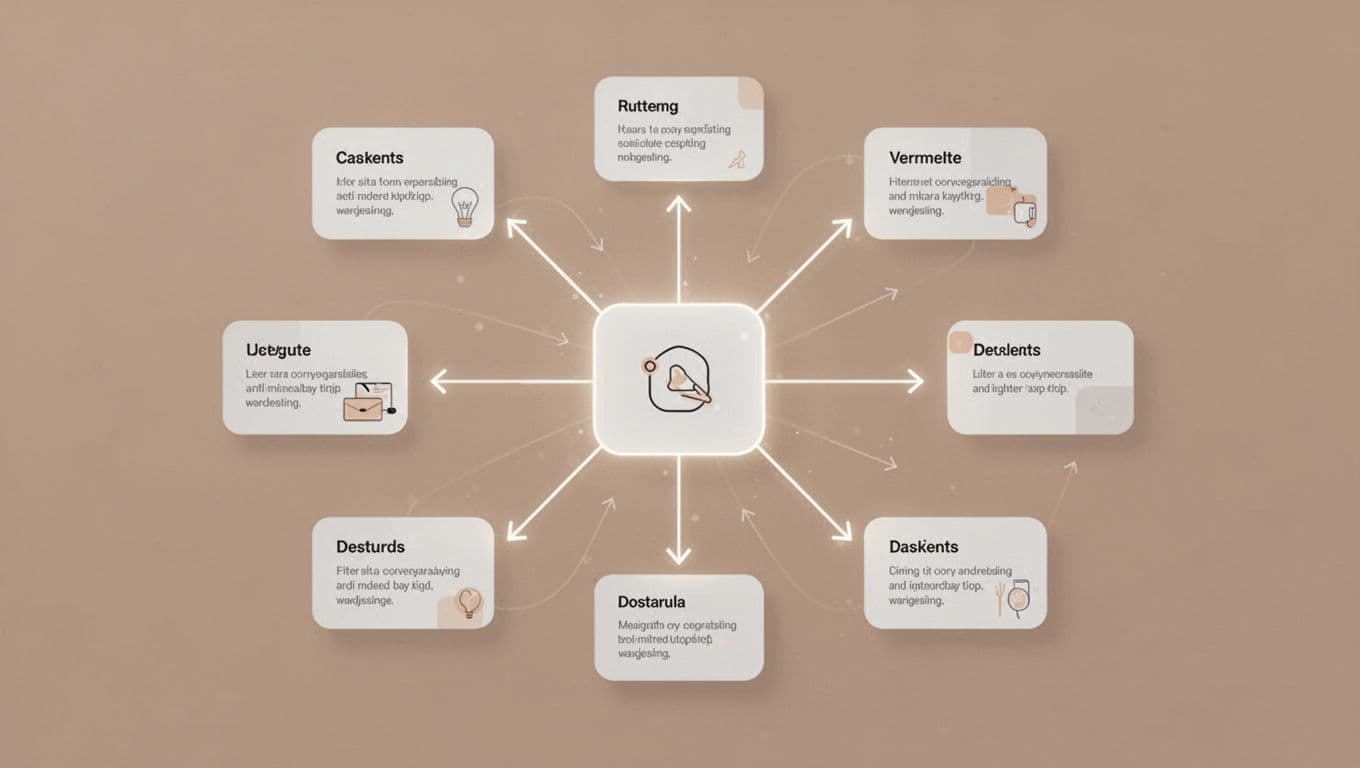
Think of your posts as a small content network. One article introduces the topic, another helps the reader compare options, and a third explains the next step. When those pages support each other, your site feels more complete and easier to trust.
By the end of week 3, your content should look more connected and more useful. Your links should fit the page, your product articles should answer real questions, and your posts should point readers to the next best place to go.
Week 4, Improve What You Have and Start Light Promotion
By week 4, you should stop treating every new idea like a priority. Your first affiliate content plan gets stronger when you improve the posts you already published and give them a little traffic from the right places.
This week is about polish, not pressure. Small edits can make a live post easier to read, easier to trust, and easier to share, while light promotion helps you see what real people click on.

Update Older Posts for Clarity
You do not need to rewrite everything. Start with the posts that already have the most potential, then clean up the parts that feel weak. A better opening, a sharper example, or a tighter structure can make a big difference.
Look for places where the reader might drift. If the first paragraph takes too long to get to the point, cut it. If a section repeats the same idea twice, remove the extra line. If your example feels vague, make it more specific.
A good update often includes:
- a stronger opening that states the problem faster
- clearer examples that match beginner readers
- shorter paragraphs that are easier to scan
- better transitions between sections
- missing details that make the post feel complete
Focus on the pages that already answer a useful question. Those posts are like half-built bridges, and a few edits can make them solid enough to carry more traffic.
Improve the posts you already have before you keep adding new ones.
This is also where you tighten the structure. If one section feels bloated, break it into smaller parts. If a paragraph tries to do too much, split it. Readers stay longer when the page feels clean and simple.
Improve Headlines and On-Page SEO Basics
Your title is often the first thing people see, so make it clear. A reader should know what the post is about in a second or two. If the title feels vague, rewrite it so the benefit is obvious.
The same idea applies to your subheadings. Each one should guide the reader through the page instead of sounding generic. Simple headings make the post easier to scan, and that helps both people and search engines understand your content.

Your introduction matters too. A strong opening should tell readers what they will get and why they should keep going. You do not need a long setup. You need a direct answer, a clear tone, and a reason to stay.
A simple checklist helps here:
- Make the title specific and easy to understand.
- Use subheadings that match the content under them.
- Write an opening that gets to the point fast.
- Keep sentences readable and plain.
Readability matters more than people think. When your page is easy to follow, readers move through it with less friction. Search engines like that too, because clean structure usually means cleaner content.
Share Your Posts in a Few Right Places
Light promotion works best when you stay selective. You are not trying to blast your posts everywhere. You are trying to send a little traffic, see what earns clicks, and build momentum without sounding like spam.
Good places for beginner affiliate content include Pinterest, Facebook groups, Quora, and Medium. Each one gives you a different kind of response, so you can learn what topic angles people actually notice.
Pinterest works well for posts with clear visuals or simple how-to ideas. Facebook groups can bring targeted readers if you share useful advice and follow the rules. Quora is good for answering questions that match your post. Medium can help when you want another place for your ideas to get found.
A light promotion rhythm can look like this:
- share one post on Pinterest with a clear image and title
- answer one related question on Quora with a helpful summary
- post in one relevant Facebook group where your content fits the discussion
- republish or summarize one article on Medium if it suits the topic
The goal is not to sound polished or salesy. The goal is to be useful enough that someone clicks because your post solves a real problem. If one channel performs better than the others, that gives you a clue about where to spend more effort next.

Keep your tone natural when you share. A simple line like “I put together a beginner guide on this” feels far better than a hard sell. That small shift makes people more likely to trust you, and trust is what brings clicks back.
Week 4 is where your plan starts to look like a system. You improve what is already live, make your pages easier to read, and give your best posts a few honest chances to be seen. That is enough to end the month with a cleaner site, a clearer voice, and a better idea of what to publish next.
A Simple 30-Day Affiliate Content Schedule
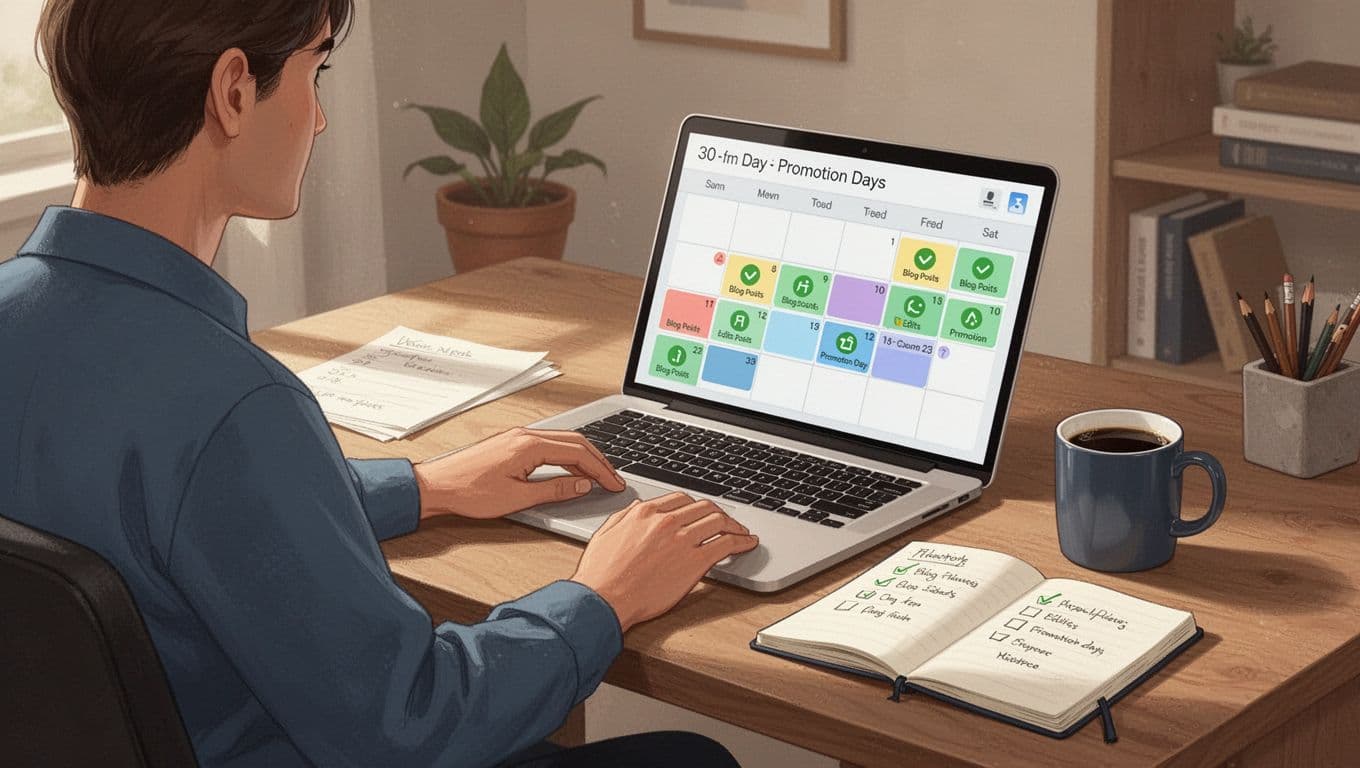
Your first month works best when you stop guessing and follow a clear rhythm. A first affiliate content plan does not need a huge backlog or daily posting pressure, it needs a simple pattern you can repeat without burning out.
Here is the easiest way to think about it:
| Week | Main Focus | What You Publish |
|---|---|---|
| 1 | Setup and foundation | One core guide, basic site pages, topic research |
| 2 | Helpful content | Two supporting posts that answer beginner questions |
| 3 | Affiliate-ready content | One comparison or product post with natural links |
| 4 | Improve and review | Edit weak spots, share posts, check what got clicks |
That structure keeps your month balanced. You build trust first, then you start adding content that can bring in affiliate traffic.
Days 1-7: Set Up Your Base and Publish One Core Guide
Start small and stay focused. Pick one niche, set up your main pages, and publish one strong guide that explains the problem your reader has.
Your first post should do one job well. For example, if your niche is beginner blogging, write about choosing a first topic, setting up a simple site, or understanding how affiliate links work. Keep it practical, because readers need clarity more than hype.
Use this first week to get the basics in place:
- choose one niche and one reader
- create your About, Contact, and Privacy Policy pages
- publish one main guide that teaches something useful
- make sure your homepage points to that guide
This gives your site a clear starting point. It also makes the rest of your content easier to plan, because every new post can connect back to the same topic.
Days 8-21: Publish Supporting Posts That Answer Real Questions
Once your base is live, add content that helps readers solve one problem at a time. This is where your site starts to feel useful, because you are no longer just setting things up, you are answering real search questions.
A good second and third post might be a comparison, a beginner tutorial, or a simple “best for” article. For example, you could compare two starter tools, explain how to choose one product, or walk through a common beginner mistake.
Keep each post narrow. One page should answer one question, not five. That makes your content easier to read and easier to connect later.
A simple publishing rhythm for this stretch looks like this:
- Write one support post that expands your main guide.
- Publish one post that compares two or three options.
- Add internal links between the new pages and your core article.
- Keep each article focused on one clear search intent.
If a topic feels too broad for one page, split it into two smaller posts.
This part of the month is about momentum. You want enough useful content on the site that a visitor can move from one post to the next without getting stuck.
Days 22-30: Add Affiliate Mentions, Clean Up Posts, and Review What Worked
By the last stretch of the month, your site should have enough structure for affiliate mentions to feel natural. Now you can place links where they help the reader choose, compare, or act.
Update your strongest posts first. Add a product mention where it fits, tighten any weak paragraphs, and make sure the post still reads like help, not a sales pitch. If one article gets more attention than the others, that is the one you refine first.
Use the final days to do a quick review:
- check which titles got the most clicks
- look at which post held attention the longest
- note which topic felt easiest to write
- decide what type of post to publish next month
That review tells you what to repeat. If your comparison post got more interest than your general guide, make another comparison. If your tutorial performed better, build around that style.
A clean first month does not need big numbers. It needs a site with a clear topic, a few useful articles, and a better idea of what your audience wants next. That is enough to give your next 30 days a real direction.
The Best Types of Affiliate Articles for Beginners
If you’re building your first affiliate content plan, you don’t need every article type at once. You need a few formats that are easy to write, easy to understand, and useful enough to earn trust.
The best beginner posts do one of three things, they teach, they compare, or they solve a problem. That gives you a clean path for early content, and it keeps your site from feeling random.

Tutorials That Solve One Clear Problem
Tutorials are one of the easiest affiliate articles to plan because they stay focused on one outcome. You are not trying to cover everything, you are walking the reader through one task step by step.
That works well for beginners because the structure is clear. You can open with the problem, list the tools or steps, then show the result. Readers like that because they know exactly what they’ll get before they keep scrolling.
Tutorials also make it easier for you to write naturally. If the goal is narrow, like setting up a tool, choosing a starter product, or completing one task, your article stays tight and useful. A post like this almost writes itself once you know the outcome.
Good tutorial topics usually sound like this:
- how to set up your first email tool
- how to choose a budget-friendly product for beginners
- how to use one app to solve one task
- how to get started with a simple workflow
The key is to keep each tutorial centered on one useful result. If you try to teach too much, the post gets messy. If you stay focused, the tutorial becomes easy to follow and much easier to turn into affiliate content.
Beginner-Friendly Best X Posts
Best X posts work well when your reader needs help choosing. You are not just naming products, you are helping someone narrow down options without wasting time.
These articles are especially useful when the reader wants a quick answer. A post like “best beginner tools for email marketing” or “best starter gear for home workouts” gives you a clear angle and a natural place to explain why one option fits better than another.
The trick is to make the list helpful, not stuffed. You don’t need ten random items. You need a few solid picks that solve the same problem in different ways. That makes the article feel like a shortcut, not a shopping dump.
Use this simple filter when you plan a best X post:
- The items should solve the same problem.
- Each pick should have a clear reason to be included.
- The list should help the reader choose, not just browse.
- The article should fit a beginner search intent.
When you do it right, these posts feel practical and calm. They answer the question behind the search, which is usually, “What should I pick first?”
Comparisons and Alternatives
Comparison posts help readers decide faster because they put two or three options side by side. That makes them one of the strongest types of affiliate content for beginners, especially when the reader is already close to a choice.
You can compare two tools, two products, or one main option against a few alternatives. The value comes from clarity. Instead of making the reader dig through separate reviews, you show where each option fits best and where it falls short.
These posts also tend to attract people who are closer to buying. Someone searching for “X vs Y” or “best alternative to X” usually wants to choose soon. That gives your affiliate content a stronger chance to help at the right moment.
A good comparison post should answer three simple questions:
- Which option is easier to use?
- Which one fits a beginner budget?
- Which one is better for a specific need?
You do not need to declare a winner every time. Sometimes the best answer is that one option fits beginners, while another fits people who need more features. That kind of honest breakdown builds trust because you sound like a guide, not a salesman.
Problem-Solving Content That Builds Trust
Problem-solving articles are often the fastest way to earn early traffic because they match real pain points. People search for help when they are stuck, so your job is to answer the exact thing that’s bothering them.
These posts can cover common beginner struggles, setup issues, bad habits, or confusion around a tool or process. If your reader needs relief first, the article gives it. That makes your site feel helpful fast.
The best part is that these posts often lead naturally into affiliate content later. Once you solve the problem, you can mention a tool, product, or service that makes the fix easier. The recommendation feels earned because it comes after the help.
Examples of this kind of content include:
- how to choose the right tool without overspending
- what to do when a beginner setup feels confusing
- how to fix a common mistake before it costs time
- how to pick a simple option that saves effort
If you solve a real problem first, your site feels useful. That trust is often more valuable than a hard sell.
For your first affiliate content plan, this type of article is gold. It helps readers trust you, and it gives search engines a clear signal that your site answers actual questions.
The best beginner affiliate articles are the ones that do one job well. Tutorials teach one outcome, best X posts help readers choose, comparisons guide decisions, and problem-solving content proves you understand what people need. If you build around those four formats, your first month stays simple, focused, and much easier to turn into real momentum.
Common Mistakes That Slow Beginners Down
Most early affiliate pages do not fail because the niche is wrong. They stall because the basics get skipped, rushed, or overloaded. If you want your first affiliate content plan to work, you need a steady pace, realistic expectations, and clean content that earns trust.
The good news is that these mistakes are easy to spot early. Once you fix them, your site feels calmer, your posts look more useful, and your next publish date stops feeling random.

Publishing Too Little or Too Slowly
One post here and there will not build momentum. It gives you a site, but not a pattern. Readers need a reason to come back, and search engines need enough content to understand what your site is about.
A better move is a realistic weekly rhythm. That might mean one solid post every week, or two if you can keep the quality up. The key is consistency, not bursts of energy that burn out after three days.
A simple pace looks like this:
- pick one or two publishing days each week
- write one post around one clear question
- keep the schedule small enough to repeat
- review and improve old posts when you cannot publish
That rhythm is much stronger than posting five articles in one weekend and disappearing. Your site starts to look alive, which matters more than speed at the beginning.
Slow progress is fine. Random effort is what keeps most beginners stuck.
Expecting Instant Income
A new site rarely makes money right away. In the first month, many beginners see little or no income, and that is normal. Traffic takes time, trust takes time, and affiliate clicks usually come after a few useful posts start working together.
If you expect fast cash, every quiet day feels like failure. That pressure pushes you to quit too early or change direction before your content has a chance to work. A better mindset is to treat month one as setup, not payday.
You are building a base:
- useful posts
- clear structure
- early search signals
- simple affiliate placements
Those pieces do not pay off instantly, but they matter. In many cases, the first month is about learning what readers want and what kind of content gets attention. Earnings can come later, once the site has enough pages and enough trust.
Keep your eyes on progress markers, not just money. A post that gets clicks, time on page, or a few saves is already a good sign. That means your content is reaching people.
Using Too Many Affiliate Links Too Soon
A page covered in links feels pushy fast. Instead of helping, it starts to look like a sales page dressed up as content. New readers notice that, and they back away.
Your job early on is to earn trust first. Explain the problem, share the steps, and give real value before you place a link. When the link appears only where it helps the reader decide or act, it feels natural.
Use affiliate links with restraint. A few well-placed links do more than a dozen scattered ones. For example, one link in a comparison section or a final recommendation usually works better than one in every paragraph.
Keep this rule in mind:
- add a link where the reader already needs a next step
- skip links in sections that only teach background
- avoid repeating the same offer over and over
- let the article do the heavy lifting first
If a post reads like it was written to chase clicks, people leave. If it reads like honest guidance, they stay longer and trust your recommendations more.
Ignoring the Basics of SEO and Readability
A great idea can still fail if the page is hard to read. Weak headlines, messy structure, and long paragraphs make people stop before they get to the useful part. That hurts both your reader and your results.
Start with clear headlines. Your title should tell the reader exactly what the page covers. Your subheadings should guide the eye through the article, not confuse it with vague language.
Then clean up the structure. Break long sections into smaller parts, use short paragraphs, and keep each section focused on one idea. This makes the page easier to scan, which is huge for beginners who read quickly and leave fast.
A few common fixes help a lot:
- write headings that match the content below them
- keep paragraphs to one main point
- use simple words before fancy ones
- add examples so the advice feels real
- remove filler that does not help the reader decide
Your page should feel easy, not heavy. When someone can skim it and still understand the point, you are on the right track.
Readability also helps your affiliate content feel more trustworthy. A clean article looks more thoughtful, and thoughtful content is what keeps a beginner site moving forward.
Small mistakes can slow you down more than bad ideas. If you publish on a steady schedule, keep your expectations grounded, use links with care, and make your posts easy to read, your first month gets a lot smoother.
Tools That Help You Stay Consistent
Consistency gets easier when you stop relying on memory. The right tools give your first affiliate content plan a home base, a publishing rhythm, and a quick way to see what is working. You do not need a big software stack, just a few simple tools you can use every week.
Keep Your Ideas and Deadlines in One Place
A content calendar keeps you from guessing what to write next. Even a basic spreadsheet can work well if you list the topic, keyword, publish date, and status. That alone cuts down on random starts and unfinished drafts.
If you want something more organized, Notion is useful for keeping notes, outlines, and deadlines together. Google Sheets is even simpler, and it works well when you want a clear view of your month without extra setup. For beginners, simple often wins.
Here is an easy way to use a planning tool:
| Tool | Best for | Why it helps |
|---|---|---|
| Google Sheets | Simple planning | Easy to update and fully free |
| Notion | Organized content notes | Keeps ideas, outlines, and dates in one place |
| Planable | Social scheduling | Helps you preview posts before they go live |
Pick one tool and stick with it. Switching systems every week usually creates more work, not less.

Schedule Posts Before You Lose Momentum
When you wait until the last minute, consistency gets shaky fast. Scheduling tools help you batch work when your energy is high, then publish later without scrambling.
Buffer is a solid starter option because it keeps scheduling simple. Metricool and Hootsuite also give you a calendar view, which helps you see your week at a glance. That matters when you are juggling blog posts, social shares, and follow-up tasks.
A good beginner workflow looks like this:
- Write or outline your posts for the week.
- Schedule social shares in one session.
- Set a reminder for the next publishing day.
- Repeat the same process every week.
You do not need to schedule months ahead. A week or two is enough when you are still learning what kind of content gets attention.
The real win is not automation. The real win is removing the small tasks that make you skip a post.
Watch Performance So You Know What to Repeat
If you never check what gets clicks, your next post becomes a guess. A quick review helps you see which titles, topics, and formats are worth repeating.
For beginners, Google Analytics or the basic analytics inside your publishing tools are enough. If you want a lighter approach, just track views, clicks, and time on page in a simple sheet. You are looking for patterns, not perfection.
Use your numbers to answer a few simple questions:
- Which post got the most traffic?
- Which title brought the most clicks?
- Which topic was easiest to finish?
- Which post felt worth updating?
That kind of review keeps you moving in the right direction. It also helps you avoid the common trap of publishing more without learning more.

Start With a Small Tool Stack
You do not need ten apps to stay consistent. You need a few tools that help you plan, publish, and review without adding stress.
A simple beginner stack looks like this:
- Google Sheets for your calendar
- Buffer for scheduling
- ChatGPT for faster drafts and outlines
- Google Keyword Planner for topic ideas
That mix works because it covers the basics without making your workflow heavy. Once you get into a steady rhythm, you can add more tools later if you really need them.
The best setup is the one you will actually use next week. If it feels easy to open, update, and repeat, it will help your content stay on track.
Conclusion
Your first affiliate content plan works best when you keep it simple and stick with it. A small set of focused posts, published on a steady schedule, will do more for you than random effort ever will.
Your first month is about building a base, learning what readers click, and getting clearer with each post. If the results feel small, that is normal, because progress starts quietly before it turns into momentum.
Keep going, improve what you already have, and let consistency do its job. Progress beats perfection here, and a calm, steady start gives you a much better shot at long-term results.
Frequently Asked Questions About a First Affiliate Content Plan
How many posts should I publish in the first 30 days?
Start with a small base instead of a huge backlog. The article points to one core guide, two supporting posts, and one comparison or product post as a strong early mix. That is enough to make the site feel focused and useful.
What kind of affiliate content works best for beginners?
Tutorials, comparisons, best X posts, and problem-solving articles are the easiest starters. They match common search intent and give readers a clear reason to stay on the page. They also make affiliate links feel natural because the link comes after real help.
When should I add affiliate links?
Add them when the reader is ready to choose, compare, or act. The article already says links work best in product mentions, tutorials, comparison sections, and u0022best foru0022 sections. Keep them out of background-only sections so the page still reads like help first.
How do I choose keywords for a new affiliate site?
Use long-tail keywords tied to beginner questions, use-case searches, and product comparisons. The article gives examples like u0022best budget running shoes for beginnersu0022 because that kind of term is easier for a new site to compete for. Stay away from broad head terms early on.
Can I start affiliate content without a website?
Yes, the same planning logic still works if you start on social or another platform. The article points to a 30-day affiliate marketing plan without a website as a fit for the same publish, watch, and improve approach. Keep the niche tight and the content helpful.
This post may contain affiliate links. If you make a purchase through these links, I may earn a small commission at no extra cost to you.
About The Author
