
Your full-time job already takes your best hours, so building a digital product side hustle can feel impossible when you have limited energy left. The answer is to protect your time instead of working every spare minute, then choose a small product you can finish, sell, and improve without letting it take over your week.
Digital products can create repeat sales because you don’t need to recreate or ship each copy, but income isn’t guaranteed. You’ll need to test your idea, promote it consistently, and accept that the first version may need changes. A focused beginner guide to digital products can help you choose a practical format, while digital product ideas for beginners can help you find an offer that fits your skills and audience.
This guide will show you how to plan short weekly work blocks, use simple tools and automation to manage sales, market with limited time, and decide when growth makes sense. You’ll also see how using AI for online income and a Pinterest content system can support your promotion without adding another full-time workload.
This post may contain affiliate links. If you make a purchase through these links, I may earn a small commission at no extra cost to you.
Key Takeaways
- Choose a small digital product that fits your skills, audience, and limited weekly availability.
- Protect recurring work blocks, then match demanding tasks with your highest-energy hours.
- Break creation into 10 to 30-minute tasks so progress continues even during busy weeks.
- Automate sales, delivery, and routine promotion with simple tools before adding more work.
- Review your results weekly, improve what sells, and grow only when your job, health, and personal time remain protected.
Build a Side Hustle Schedule You Can Maintain
Managing a digital product side hustle with a full-time job requires a schedule you can repeat, not a routine that drains you after two weeks. Start with 5 to 8 focused hours per week, then adjust after you see how your job, sleep, and personal responsibilities affect your available energy.
Your goal is steady progress while protecting your full-time performance, health, relationships, and downtime. If your side hustle regularly forces you to skip sleep or ignore important commitments, the schedule is too demanding.
Match Side Hustle Tasks to Your Energy
Begin with a simple time inventory. Look at your workdays, commute, family commitments, exercise, meals, and usual bedtime. Then identify the hours when your mind feels clearest.
Use your best energy for tasks that move the product forward, such as outlining a template, recording a lesson, writing a sales page, or improving the offer. Save lighter work, including formatting, scheduling posts, checking orders, and replying to messages, for lower-energy periods.
A realistic weekly plan might include:
- Two 90-minute sessions for product creation or improvement.
- One 60-minute session for marketing and content.
- One 30-minute session for reviewing sales, questions, and next steps.

Put these sessions on your calendar like work appointments. Before each block begins, write down one specific outcome, such as “finish the workbook introduction” instead of “work on my product.” A clear finish line helps you start faster and stop on time.
Protect Consistency Without Chasing Hustle Culture
You don’t need to work on your digital product every day. You need a reliable rhythm that keeps the project moving during ordinary weeks and busy periods.
Choose a minimum weekly target you can meet even when work becomes stressful. For example, you might complete one product task and publish one promotional post each week. During quieter periods, you can add time, but don’t build your entire plan around occasional bursts of motivation.
Batch similar tasks to reduce setup time. Create several Pinterest pins in one session, draft multiple emails together, or schedule content ahead of a demanding workweek. Tools such as Google Calendar, Trello, or Notion can keep your tasks visible without requiring a complicated system.
Review your schedule each weekend. Ask whether your workload, sleep, health, and relationships stayed protected. If they didn’t, reduce the next week’s side hustle hours before the pressure becomes burnout.
Choose a Digital Product That Fits Your Skills and Schedule
The best digital product for your side hustle solves a clear audience problem without creating a second full-time job. Before choosing a format, match three factors: what your audience needs, what you already know, and how much support buyers will expect after purchase.
Start With a Problem You Understand
Look at the questions people ask in your blog comments, YouTube replies, Pinterest messages, or online communities. Repeated questions often reveal a product idea. For example, beginner affiliate marketers may need a content calendar, keyword tracker, Pinterest planning sheet, or simple checklist for publishing their first posts.
A useful product helps someone complete a specific task or reach a clear short-term goal. “Learn online marketing” is too broad for a first product. “Plan 30 days of affiliate content” gives you a much easier product to outline and promote.
Write down three problems your audience faces, then compare each idea by asking:
- Does the problem happen often enough for people to seek help?
- Can your product provide a clear result?
- Would someone understand its value from a short sales-page description?
Match the Format to Your Existing Skills
You don’t need to become a designer, programmer, or course creator before selling your first product. Use skills you already practice at work or in your content.
A spreadsheet may fit you if you enjoy organizing information. A Canva template could work if you create social media graphics regularly. If you explain ideas clearly, a short guide, workbook, or recorded lesson may feel natural.

A guide to comparing digital product ideas can help you evaluate formats before committing your limited evenings and weekends.
Choose Low-Support Products First
Your schedule matters after the sale, too. A large course may require updates, technical troubleshooting, refunds, and repeated customer questions. Software can create even more support work if buyers encounter bugs or compatibility issues.
For a full-time worker, a focused template, checklist, workbook, spreadsheet, short guide, or recorded lesson is often easier to manage. Add clear instructions, a short frequently asked questions section, and a contact method. Then set a weekly support window instead of answering messages throughout the day.
A smaller product with clear boundaries can be more profitable for your schedule than a larger offer that buyers constantly need help using.
Start with the simplest format that solves the problem well. You can expand it later when customer questions show you what deserves more depth.
Build and Sell Your Product With Less Manual Work
A digital product side hustle becomes easier to manage when each sale follows the same path. Set up the files, checkout, delivery, customer emails, and support rules once, then avoid rebuilding the process for every buyer.
Create One Simple Product Workflow
Start with a consistent folder structure on your computer or cloud drive:
Product Filescontains the final PDF, templates, videos, or other buyer files.Sales Pagecontains product descriptions, images, and checkout links.Customer Supportstores common questions and approved replies.Archivekeeps older versions after you update the product.
Before publishing, test the product like a customer. Open every link, check the files on both desktop and mobile, confirm that videos play, and follow the checkout process with a test purchase. Use a second email address if possible, so you can verify the receipt and download instructions.
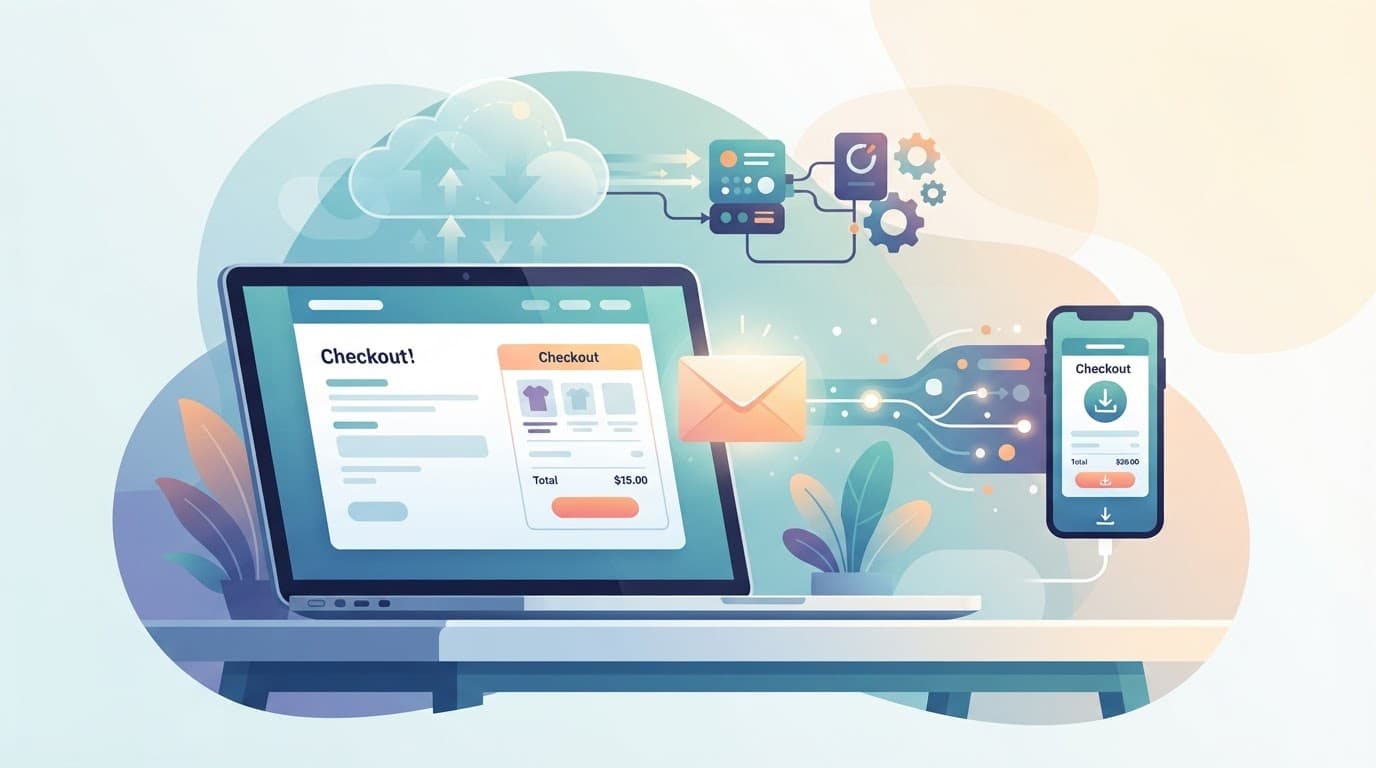
Choose a platform that handles payment collection and automatic delivery. Before committing, check its platform fees, payment processing fees, tax features, and available local payment methods. A low monthly price may still cost more if your customers pay through methods the platform doesn’t support.
Automate Delivery and Customer Messages
Your checkout should send the buyer to a confirmation page and trigger an email containing the download link or access instructions. Add a second email with basic setup guidance, then send a short follow-up asking whether the product worked as expected.
Keep these messages short. Explain where the files are, how long the download link remains active, and how customers can contact you. A saved reply can answer common questions about downloads, refunds, duplicate purchases, and file access without requiring you to write from scratch.
Back up the product files in at least two places, such as your computer and a cloud storage account. When you release an update, save the new version separately and record the date. This prevents you from accidentally replacing a file or sending customers an unfinished draft.
Your refund policy should appear before checkout. State the refund period, the steps for requesting one, and any limits that apply to downloadable products. Keep the policy easy to understand, then follow it consistently. A clear policy protects your time and gives buyers confidence before they purchase.
Market Your Digital Product When You Have Very Little Time
You don’t need a large audience or a presence on every platform to sell a digital product. Choose one traffic channel, connect it to one simple sales path, and repeat a small set of marketing tasks each week.
Your basic path might look like this:
Helpful content -> email signup -> product page -> automated delivery
That structure gives each post a job instead of asking every piece of content to make an immediate sale.
Choose One Main Traffic Channel
Start with the platform where your audience already spends time and where you can create content without much friction. Pinterest can work well for evergreen blog content, templates, checklists, and beginner guides because useful pins can continue sending visitors after publication.
A Pinterest content system can help you plan pins in batches instead of designing something from scratch every day. If short videos feel easier, choose YouTube Shorts, Instagram, or TikTok instead. You don’t need to maintain all three.
Set one weekly marketing block for creating, scheduling, and reviewing content. During that block, focus on one product and one customer problem.

### Turn One Idea Into Several Posts
You can stretch one useful idea across multiple formats without repeating the exact same post. For example, if your product helps beginners plan affiliate content, start with one detailed topic and adapt it for each channel:
- A blog post can explain the complete planning process and link to your email signup.
- Pinterest can turn the main steps into several vertical pins.
- An Instagram carousel can show common planning mistakes.
- A YouTube Short or TikTok can demonstrate one quick planning tip.
Create the core idea once, then change the opening, examples, and format. This approach reduces the time you spend switching between unrelated topics.
Your audience may need several reminders before buying, so one useful idea can support promotion for weeks.
Keep the Sales Path Simple
Offer a short free checklist or template in exchange for an email address. Then send a welcome email, a helpful follow-up, and a product invitation. Your product page should explain the problem, show what buyers receive, and include a clear purchase button.
Review your results once a week. Track email signups, product-page visits, sales, and common customer questions. Keep the content that attracts the right people, then improve the weak step instead of adding another platform.
Track Results, Improve the Product, and Scale at a Safe Pace
Once your product is live, use your limited work hours to study what customers do, not vanity numbers. Your goal is to find which activities attract qualified visitors, create sales, and produce a reasonable profit after fees.
Review your numbers once a week or every two weeks. A short review prevents you from making decisions based on one unusually good or bad day.
Measure the Numbers That Guide Decisions
Track the full path from visitor to customer:
- Qualified visitors show whether your content attracts people who need your product.
- Email signups reveal whether your free resource interests the right audience.
- Conversion rate shows how many sales-page visitors buy. Digital products are often cited around 3% to 5%, but your traffic source, price, and audience affect the result.
- Refunds and support requests reveal whether your promise, instructions, or product quality needs attention.
- Repeat buyers show whether customers trust your work enough to purchase again.
- Profit after fees tells you what the side hustle actually contributes to your finances.
Record these figures in a simple spreadsheet with the date, traffic source, visitors, signups, sales, refunds, fees, and net profit. Revenue screenshots can look impressive while hiding advertising costs, platform fees, refunds, or unpaid labor.

### Improve One Weak Point at a Time
Use the numbers to choose your next task. If qualified visitors are low, publish more useful content through your chosen channel. If visitors arrive but few join your email list, revise the free offer or signup page. If signups increase but sales remain low, improve the product page, pricing, examples, or follow-up emails.
High support requests often point to confusing instructions. Refunds may show that your sales page promises more than the product delivers. Fix the cause before creating a second product.
Drop tasks that consume time without improving these measures. Follower count matters only when it leads to relevant visitors, signups, or sales.
Scale Only When the System Feels Manageable
When sales become consistent, add one controlled improvement, such as more pins, a better email sequence, or a related low-support product. Keep your full-time job, sleep, and personal time protected while you test it. If growth requires daily customer service or constant content creation, the offer needs simpler systems before you expand.
Frequently Asked Questions
Managing a digital product side hustle alongside full-time work brings practical questions that scheduling alone can’t answer. These common concerns can help you protect your job, make better decisions, and avoid unnecessary pressure.

### Do you need your employer’s permission to sell digital products?
Check your employment contract and company policies before launching. Some employers restrict outside businesses, competing work, client solicitation, or use of company equipment and confidential information. Keep your side hustle separate from your job, use personal devices and accounts, and ask for written clarification if the policy is unclear.
How should you handle taxes from digital product sales?
Keep records of every sale, platform fee, refund, business expense, and payment received. Tax rules depend on where you live and how your business is structured, so consult your local tax authority or a qualified tax professional before income grows. Setting aside part of each payment can prevent an unpleasant bill later.
What should you do if your first product gets no sales?
Don’t immediately create another product. Review whether the audience sees the problem as urgent, whether your sales page explains the result clearly, and whether enough relevant people have seen the offer. Ask a few potential buyers for specific feedback, then change one part of the offer before testing again.
Can AI help you manage a digital product side hustle?
AI can reduce time spent on brainstorming, outlining, editing, customer-support drafts, and content repurposing. However, you still need to check accuracy, add your own experience, and protect private customer or employer information. Use AI to speed up routine work, not to publish unreviewed material.
How do you launch a product during a busy work period?
Prepare the sales page, delivery emails, support replies, and promotional content before opening sales. Then choose a launch window when your job has fewer deadlines and set a firm limit on customer-support time. A quiet launch to your email list can be easier to manage than a large public campaign.
When should you consider leaving your full-time job?
Sales consistency matters more than one unusually profitable month. Before considering a change, review your net income, savings, health insurance, tax obligations, and the time required to support customers. Keep the job until your business income is reliable enough to cover your needs and your plan includes room for slower months.
Conclusion
Your full-time job already uses much of your time and energy, so your digital product side hustle needs clear limits from the start. Choose one useful product that solves a specific problem, validate the idea with your audience, and create a basic version you can finish within your available hours. A small product with simple delivery is easier to manage than a large offer that creates constant support work.
Block your next work sessions on the calendar, then use steady promotion and a short weekly review to improve the system. You can use tools and automation to reduce repetitive tasks, but sustainable progress still depends on protecting your sleep, job, health, and personal time. The goal is reliable progress alongside your full-time work, not constant work or overnight income.
Choose your first product idea today, write down the problem it will solve, and schedule your next focused work session. Starting with a useful, manageable offer gives you a better chance of building a side hustle you can maintain.
About The Author
