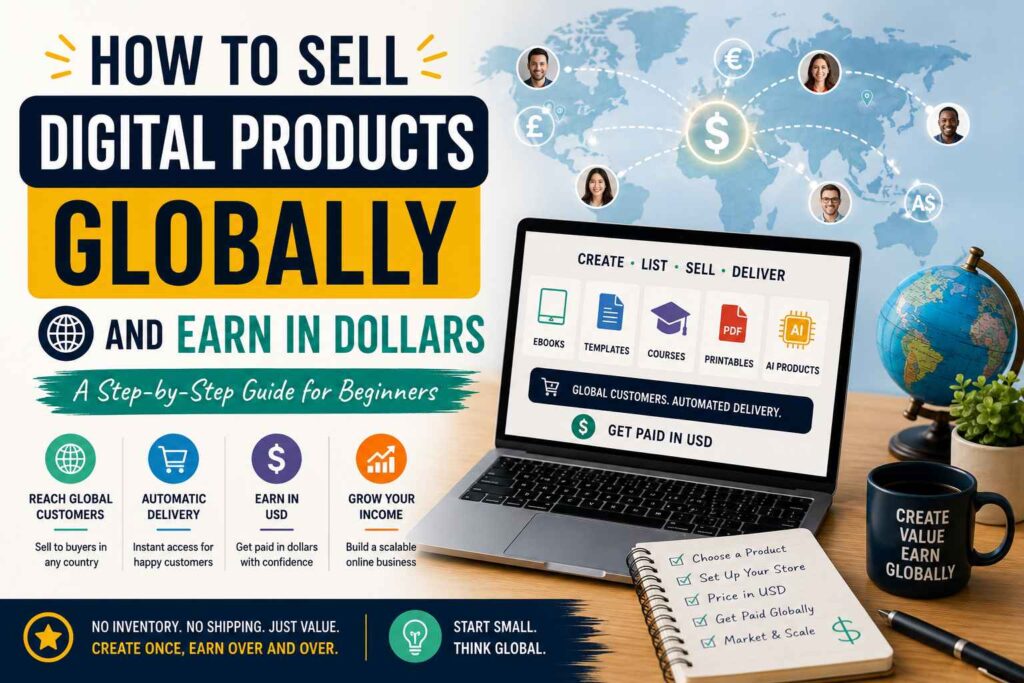
Selling a useful digital product can put your offer in front of customers worldwide, without inventory, shipping, or a large starting budget. That makes selling digital products globally a practical option for beginners in India and other countries who want to earn in USD.
You can start with an ebook, template, course, printable, or AI-assisted product that solves a clear problem. After that, you’ll need to price it in USD, choose a platform such as Gumroad, Payhip, Etsy, or Shopify, set up international payments, and attract buyers through helpful content on blogs, YouTube, Pinterest, Instagram, or TikTok. This beginner guide to digital products can help you understand the basics before choosing your first offer.
Earning in dollars takes a useful product, customer trust, and steady promotion, so it isn’t a quick-money promise. We’ll also look at platform fees, payment setup, taxes, refunds, and marketing before you begin selling.
This post may contain affiliate links. If you make a purchase through these links, I may earn a small commission at no extra cost to you.
Key Takeaways
- Choose one useful product that solves a clear problem, such as a template, ebook, printable, course, or prompt pack. Explore these digital products to sell online before creating your offer.
- Use Gumroad, Payhip, Etsy, Shopify, or a similar platform to deliver products automatically to international buyers.
- Price in USD, but check platform fees, currency conversion costs, refunds, taxes, and payment rules before setting your final price.
- Accept international payments through options such as PayPal, Stripe, Payoneer, Wise, or supported local gateways.
- Promote consistently through Pinterest, YouTube, blogs, Instagram, or TikTok. Sales usually grow from helpful content and customer trust, not one viral post.
How to Sell Digital Products Globally and Earn in Dollars
Selling digital products globally follows a simple flow: find a problem, create a useful solution, list it in USD, and let a platform handle checkout and delivery. You can reach buyers in several countries without storing inventory, but your product page and payment setup must feel clear to someone who has never heard of you.
1. Choose a problem with international demand
Start with a problem that people in the United States, Canada, the United Kingdom, and other markets already understand. A budget planner, Canva template, resume pack, study guide, or short ebook can work when it helps buyers save time or complete a specific task.
Review this digital products guide if you need help choosing a format. Keep the first product focused rather than trying to serve everyone.
Use plain English, explain the result, and show exactly what the customer receives. Your product page should include:
- The problem the product solves.
- The files and formats included.
- Instructions for opening or using the files.
- Any software or account the buyer needs.
- A clear refund and support policy.
For example, an Indian creator could sell a $9 Canva content calendar template to customers in the United States, Canada, or the United Kingdom. The template should include editable pages, a short setup guide, and an explanation of who will benefit from using it.
2. Price in USD and set up delivery
Pricing in USD gives international customers a familiar reference point. A buyer sees $9 at checkout instead of calculating an unfamiliar currency first. However, the final amount can vary when the buyer’s bank converts the charge into local currency.
Choose a platform such as Gumroad, Payhip, Shopify, or another service that supports international payments. Connect an available processor, such as PayPal or Stripe, then upload the file and test the checkout yourself.
After payment, the platform normally sends a download link or grants access to a customer area automatically. You may receive the payment in USD, but your bank can convert it into local currency during settlement. For an Indian seller, that may mean the bank receives INR after applying its exchange rate and fees. Services such as Payoneer or Wise may offer additional currency-handling options, depending on eligibility.
3. Track sales and support buyers
Keep records of every sale, platform fee, conversion charge, refund, and business expense. Also answer access questions promptly and replace broken files when needed. Regular promotion through Pinterest, YouTube, or a blog can bring steady traffic, while using AI for digital product ideas can help you plan future offers.

## Choose a Digital Product People Around the World Will Buy
A product sells globally when it solves a narrow problem for a clear group of buyers. Start with demand, not the format. A useful Notion system for freelance designers is stronger than a generic productivity template because the buyer and outcome are easy to identify.
Validate the idea before you build the full product
Choose one buyer, then write a one-sentence promise, such as: “This content planner helps new Pinterest creators schedule a month of posts in one afternoon.” Search that problem on Pinterest, YouTube, TikTok, Instagram, Reddit, and relevant communities. Look for repeated questions, complaints, and workarounds.
Ask potential customers what they already tried and what still feels difficult. Comments, polls, email replies, YouTube questions, and direct feedback can reveal buying intent. Likes show attention, but they don’t prove someone will pay. Stronger signals include requests for a link, questions about price, waitlist signups, and people describing an urgent problem.
Before spending weeks building, test a small sample. Share three pages from a workbook, one Canva template, a short ebook chapter, or a basic version of a Notion system. You can also publish a waitlist or presale when buyers understand the promise and delivery date. If nobody wants the sample, revise the offer before expanding it.

Beginner-friendly formats include checklists, printables, spreadsheets, prompt packs, stock assets, mini-courses, memberships, and software tools. A single template or printable may suit a low-priced impulse purchase at $3 to $15. A bundle can fit a mid-priced offer around $15 to $50, while a focused course may support $19 to $99 or more when it teaches a valuable result.
Make your product easy for international buyers to use
Use common file formats such as PDF, DOCX, XLSX, PNG, or editable Canva and Notion links. Test delivery on a phone, since many buyers will open the purchase away from a computer. Add a short getting-started guide, a preview, the required software, supported language, license terms, refund policy, and expected support response time.
Avoid local-only assumptions. Add editable fields for currency, dates, names, and tax details. Use common measurements where helpful, or include both metric and US customary units. Also state whether customers receive personal-use or commercial rights.
If you plan to attract buyers through Pinterest, this guide to selling digital products on Pinterest offers a relevant promotion path. Finally, never copy another creator’s work, use unlicensed assets, or sell generic AI output. Those shortcuts create legal disputes and damage buyer trust.
Pick the Right Store and Payment Setup for International Sales
Your platform affects discovery, fees, branding, customer data, and checkout control. Start with the option that fits your product today, but leave room to grow.
### Accept payments in USD without confusing the customer
Gumroad and Etsy can help beginners reach existing shoppers, while Payhip, Shopify, WooCommerce, Sellfy, and Podia give you more control over branding, email capture, and customer relationships. Course creators may compare Teachable or Thinkific. Software sellers can review Lemon Squeezy and similar specialized checkout tools.
Gumroad commonly charges 10% plus $0.50 for direct sales and 30% through Discover. Payhip has a free plan with a 5% transaction fee, while paid plans reduce or remove its platform fee. Etsy commonly charges $0.20 per listing plus a transaction fee. Shopify adds a monthly plan and payment processing costs. Check each provider’s current pricing before publishing, since rates and terms change.
Low-cost platforms reduce your startup risk, but higher per-sale fees can reduce profit. For one small product, a marketplace may be sensible. A growing catalog may justify your own storefront. Students can compare these options with other flexible student work ideas.
Show prices in USD at checkout, then tell buyers whether their bank may convert the charge automatically. Support cards and digital wallets when available. For India-based sellers, options may include Razorpay International, Stripe India, PayPal, Payoneer, and other compliant receiving services. Confirm availability, eligibility, foreign exchange rates, settlement times, and required documents directly with each provider.
Receiving dollars doesn’t remove local tax, banking, reporting, or business registration duties. Keep invoices, payment records, refunds, and fee receipts. Also check when funds become available, since a payment can arrive days after the customer completes checkout.
Protect the sale with clear terms and product rights
State whether buyers receive personal-use or commercial-use rights, and confirm that you own or properly license every asset. Add a privacy notice, explain how the platform handles sales tax or VAT, and prepare for chargebacks and refund requests.
Your checkout page should include:
- A product preview and exact price and currency.
- The delivery method and support contact.
- Refund rules and license terms.
- A clear statement that results aren’t guaranteed.
Customer data belongs in your compliance plan, not just your email list. Get professional tax or legal advice for your country before scaling.
Build a Global Marketing System Without Buying Ads
A good digital product still needs a repeatable traffic system. Free content can attract people with a problem, build trust, and guide them toward your offer without requiring an ad budget.
Turn one digital product into a simple sales funnel
Start with helpful content that answers the buyer’s question before mentioning your product. Offer a free checklist, sample chapter, template, or short tutorial in exchange for an email address. Then present a low-cost starter product, followed by a related bundle or upgrade.
For example, publish a blog post called “How to Create a Monthly Budget.” Offer a free budgeting checklist as the lead magnet. After someone downloads it, send a short email showing how to use the checklist, then introduce a $7 budgeting spreadsheet. A few days later, offer a $19 bundle with annual budget sheets, debt tracking, savings goals, and expense categories.
Your product page should make the next step obvious. Include:
- A headline focused on the buyer’s result.
- Benefit-led bullets that explain what the files help customers do.
- Preview images showing the actual pages or templates.
- Testimonials from real customers, with permission.
- Frequently asked questions about file types, software, refunds, and usage rights.
- One clear call to action, such as “Get the spreadsheet bundle.”

### Use global content without losing a human voice
Write in clear US English, then check whether your audience uses different terms, currencies, date formats, or spelling. Add captions and subtitles to videos, descriptive alt text to images, and brief explanations for local references.
Your traffic mix can include SEO blog posts, YouTube tutorials, Pinterest search content, Instagram carousels, TikTok demonstrations, email newsletters, and helpful lead magnets. Turn one tutorial into several formats, such as a blog post, video, pin, short clip, and email. Use customer questions, product previews, examples, and before-and-after results as content ideas.
Use AI for research, outlines, mockups, support drafts, and content repurposing, as explained in this guide to making money online with AI. For evergreen discovery, follow a Pinterest content system with keyword-focused titles, consistent publishing, and tracked product-page clicks.
Test each idea with a small audience. Track views, email signups, product-page visits, conversion rate, refunds, and net revenue after fees. Let those numbers guide your next content decision.
Launch, Improve, and Scale Your Dollar-Based Product Business
A global product business grows through small tests, useful updates, and careful tracking. You don’t need to publish every week or open five stores at once. Build one offer, learn from real buyers, then expand when the numbers support it.
A practical 30-day plan for your first global product
Keep the workload manageable if you study or work part time. Set aside a few focused hours each week and move through these four phases:
- Research and validation, days 1 to 7: Choose one audience and one problem. Read customer questions on Pinterest, Reddit, YouTube, and social media. Create a simple free sample or waitlist with Google Forms, Canva, or a basic email tool. Look for replies, signups, and requests for the finished product.
- Product creation, days 8 to 15: Build a minimum viable product, such as a short ebook, template, checklist, or spreadsheet. Include only the features needed to deliver the promised result. Ask two or three people to test it, then fix confusing instructions before launch.
- Store and payment setup, days 16 to 21: Upload the files to one platform, such as Payhip or Gumroad. Add a product preview, USD price, delivery details, refund policy, and usage rights. Test checkout, download links, mobile access, and customer emails yourself. Payhip’s free plan is commonly listed with a 5% transaction fee, while Gumroad’s free plan is commonly listed at 10%, so check current terms before publishing.
- Launch and improvement, days 22 to 30: Publish helpful posts, email your list, and share a clear product demonstration. Offer early buyers a real bonus, such as a bonus template, for a stated period or buyer limit. Don’t invent countdowns. Collect questions and feedback, release corrections, and tell customers what changed.

Calculate your actual earnings with this simple formula:
net earnings = sales revenue - platform fees - payment fees - refunds - taxes - software costs - marketing expenses
Gross dollar sales can look impressive while leaving little profit. Track the net amount instead.
Know when to add a second product or new sales channel
Expand after evidence appears, such as repeated customer requests, steady sales, good conversion, or a clear audience need. First improve your best-selling product, create a logical bundle, or translate and adapt the existing offer. Bundles, affiliate partnerships, upsells, subscriptions, and licensing can increase revenue without forcing you to create a new product every week.
Build an email list so you own the customer relationship instead of relying only on a marketplace. Digital products can also complement freelance, creative, or remote work, including these low-stress jobs without a degree.
Keep a monthly dashboard with traffic, conversion rate, net dollar revenue, refunds, and email growth. Avoid underpricing, opening too many platforms, ignoring support requests, or depending on one traffic source. These numbers show whether you should improve, bundle, translate, or expand.
Frequently Asked Questions
Selling digital products globally can feel complicated at first, especially when customers live in different countries. These answers cover practical issues that often appear after your store, payment system, and marketing plan are ready.

### Do I need to translate my digital product before selling it worldwide?
No, you can start with clear US English if your target customers understand it. However, translate your product page, instructions, or checkout details when your traffic shows strong demand from a specific language group.
Start with one language and track customer questions, refunds, and conversion rates. A translated product is useful only when the translation remains accurate and easy to follow.
How can I reduce piracy and unauthorized sharing?
You can’t prevent every copy, but you can make legitimate access more valuable. Add the buyer’s name to certificates, provide regular updates, include support, and offer bonuses that are available only to customers.
For ebooks, courses, and downloadable files, use a platform with protected delivery links or account-based access. Add a simple license that explains personal use, commercial use, and sharing restrictions in plain language.
What should I do if a customer cannot download the product?
First, send the original delivery link again and ask the customer to check their spam or promotions folder. Then confirm whether the file works on their device and whether they have the software needed to open it.
Keep a backup copy of every product version. If the platform fails, provide a secure replacement link and record the issue so you can fix the delivery process.
Should I offer refunds for digital products?
Set a refund policy before launch and display it near the checkout information. You might allow refunds within a stated period when the file is defective, inaccessible, or substantially different from the description.
Payment platforms may also have their own dispute and chargeback rules. Keep screenshots of your product page, delivery records, and customer support replies in case a payment dispute occurs.
Can I use a Merchant of Record for global sales?
Yes. Services such as Paddle, Lemon Squeezy, or FastSpring may handle parts of payment processing, tax collection, invoices, and refunds. Their fees and eligibility rules differ, so compare the total cost before moving your store.
A Merchant of Record can reduce administrative work as your customer base expands. You still need to understand your local income reporting and business obligations.
What should I change if my product gets traffic but no sales?
Check whether the visitors match your target buyer before changing the product. If the audience is relevant, review the product promise, preview images, price, checkout steps, and customer objections.
Ask readers why they didn’t buy, then test one change at a time. A clearer sample, stronger demonstration, or smaller starter offer may reveal what your audience needs.
Conclusion
You don’t need a huge audience, expensive software, or a perfect product to start selling digital products globally. You need a useful offer, a reliable checkout, clear terms, and consistent content that helps the right people find it.
Begin with one audience problem, publish one simple product with USD pricing, and promote it through one repeatable channel. Before accepting international sales, verify platform fees, payment rules, currency conversion costs, tax duties, and copyright requirements for your country and product.
Your first goal is a helpful sale, not instant passive income. Use customer questions and feedback to fix the product, improve the sales page, and create better content over time. Small, informed improvements can turn a simple digital product into a practical dollar-based income stream.
About The Author
