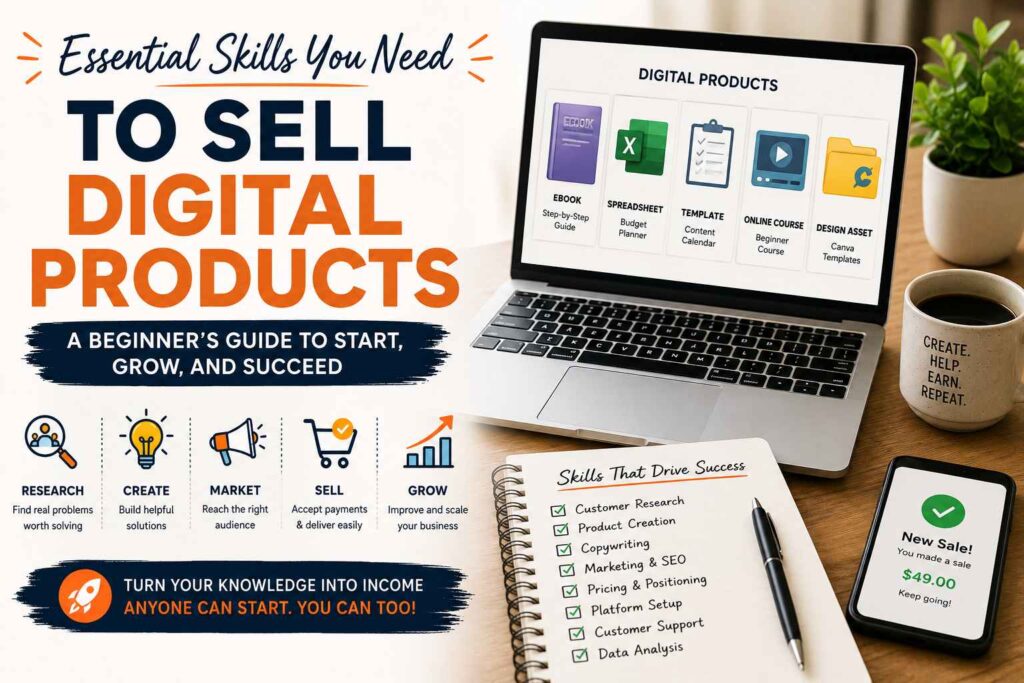
You don’t need advanced coding, a large audience, or a perfect website to start selling digital products. You can begin with a useful template, guide, spreadsheet, design asset, short course, or simple AI-assisted tool that helps someone solve a specific problem.
Your success depends on a practical mix of skills: finding a problem worth solving, creating a clear solution, presenting it well, accepting payments, delivering the product, and reaching the right buyers. Digital products are affordable to create and easy to deliver, but they still require customer research, testing, promotion, and regular improvement. A simple storefront or one of these best platforms for selling digital products can be enough to get started, while a digital product business with zero investment may help you keep your initial costs low.
Next, you’ll learn the essential skills that help you turn an idea into a product people trust and buy, including research, creation, copywriting, marketing, pricing, and basic platform setup.
You may also find this helpful: How to Sell Digital Products Online
Key Takeaways
- You need customer research and validation before creating a digital product, so your offer solves a real, specific problem.
- Strong sellers combine product creation with copywriting, SEO, social media, email marketing, and basic data analysis.
- A simple storefront should explain the product clearly, accept payments securely, and deliver files automatically.
- Customer support, privacy, refund policies, copyright awareness, and accurate product claims help you build trust.
- Start with a focused product and practical tools, then improve it using buyer feedback and sales data. Learn more about digital products versus physical items.
Essential Skills You Need to Become a Digital Product Seller
Before choosing a platform or buying software, build the skills that help you create something useful and sell it responsibly. You don’t need to master everything at once. Your starting setup may only require useful knowledge, a laptop, internet access, and basic digital tools. This beginner’s guide to digital products can help you understand the broader process.
### Use Your Knowledge to Solve One Specific Problem
Your subject knowledge, work experience, research ability, or practical skill can become the foundation of a digital product. The key is choosing a narrow audience and a clear problem instead of trying to help everyone.
For example, you could create a budget spreadsheet for college students, a content calendar for local businesses, or a beginner guide to one specific software task. A focused product is easier to explain, build, price, and promote.
Focus on the outcome your buyer wants. A simple spreadsheet that helps someone control monthly spending is more useful than a complex file filled with impressive features.
Learn Basic Research and Customer Listening
Research helps you discover what potential buyers actually need. Check search suggestions, online communities, product reviews, social media comments, surveys, and direct conversations.
Record repeated questions, frustrating tasks, and the exact words people use to describe their problems. Those details can improve your product topic, format, title, keywords, and sales copy.
Likes and compliments can show interest, but they don’t prove that people will pay. Look for stronger evidence, such as preorders, repeated requests, or buyers choosing similar products.
Build Clear Writing, Design, and Organization Skills
You need to explain ideas simply, arrange information into useful steps, and create files that first-time users can understand. Google Docs, Canva, Excel, Notion, and screen recording software can help, but your judgment still controls the result.
Use readable layouts, consistent formatting, accessible colors, clear file names, and brief instructions. These creation skills differ from selling skills, which include writing product descriptions, setting up checkout, delivering files, and answering customer questions.
Develop a Test-and-Improve Mindset
Make your first version small enough to finish and test quickly. Collect feedback, watch where users struggle, fix errors, and release updates.
Track sales, conversion rate, refunds, downloads, support questions, and repeat purchases. These measures show what needs attention. Digital products rarely create instant income, so steady improvement is one of the most useful business skills you can develop.
Validate Your Digital Product Idea Before You Build It
A broad idea becomes sellable only when you define one buyer, one problem, one promised result, and one practical format. Before you spend weeks building a course or web app, test whether people want that result and will act on it.
### Choose a Product Format That Fits the Problem
Your preferred creation method should come after you understand the buyer’s task. A PDF guide works well when someone needs clear explanations, while a checklist helps them complete a repeatable process without missing steps. Use a spreadsheet when buyers compare options, track information, or make repeated calculations.
Templates fit tasks people perform often, such as writing proposals, planning content, or organizing projects. A prompt pack can help users produce consistent results with an AI tool. Design assets and presets suit buyers who need ready-made visual elements, photo adjustments, or branded materials.
Choose a mini-course when the outcome requires several lessons or demonstrations. An audio file may suit language practice, guided exercises, or learning during a commute. A simple web app makes sense when users need instant calculations, saved inputs, or repeated decisions, such as estimating project pricing.
You can combine formats when every part adds clear value. For example, a budgeting spreadsheet may need a short PDF guide and a quick setup video. Avoid adding extra files merely to make the offer appear larger.
Test Demand With a Small Version or Pre-Sale
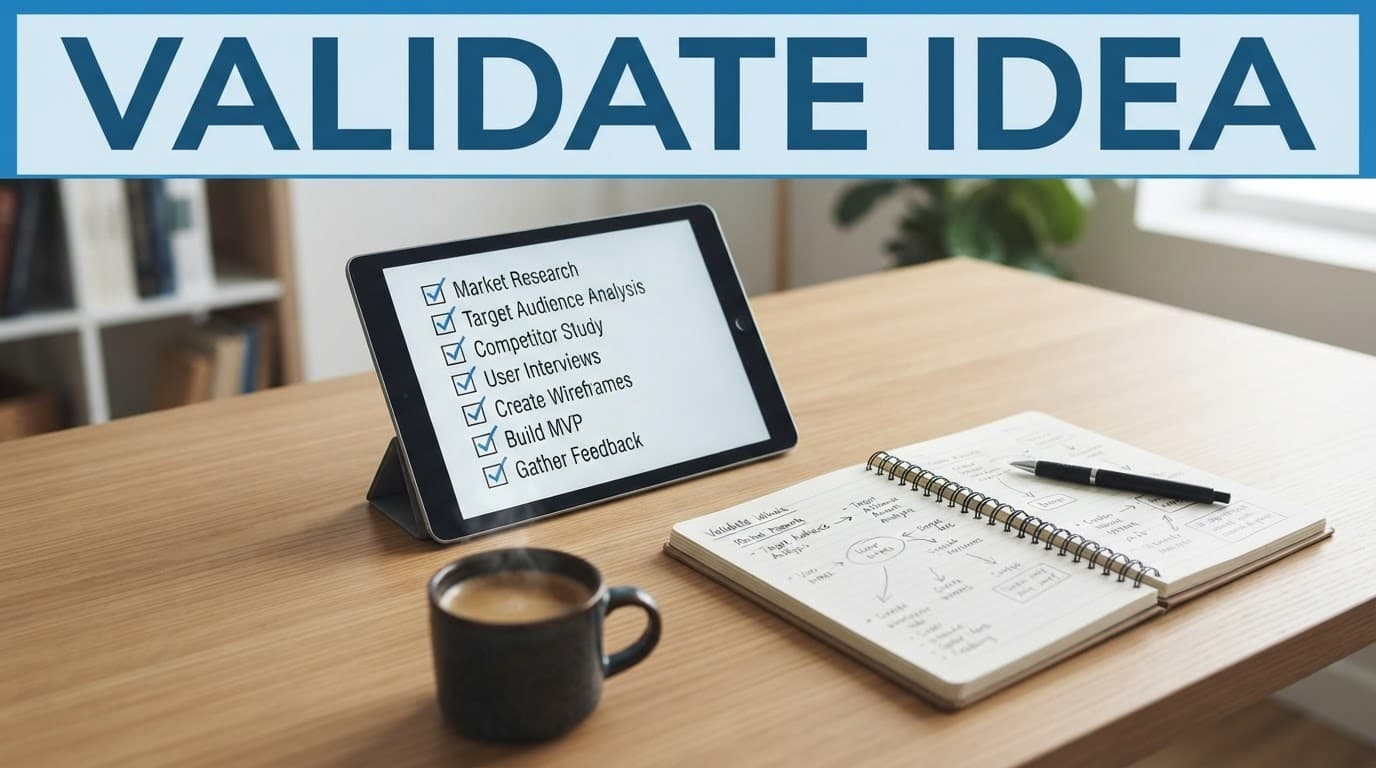
Start with the smallest version that can produce a real result. Describe the problem, show a sample page or basic feature, then ask potential buyers for direct feedback. You can use a short tutorial, free sample, survey, landing page, or one-on-one conversation before creating the full product.
Next, invite a small group to purchase the early version or join a waitlist. A paid test gives stronger evidence than general praise because buyers commit money, time, or attention.
Watch for useful signals:
- People ask the same questions about the problem or solution.
- Email signups continue after you explain the promised outcome.
- Test users complete the sample and describe how they used it.
- Buyers request a specific feature, format, or tool connection.
- Preorders or completed purchases confirm willingness to pay.
Set a clear delivery date and explain that the product is still in development. If demand stays weak, adjust the buyer, promise, or format before building further.
Study Alternatives Without Copying Them
Review competing products, free resources, customer reviews, price ranges, and delivery methods. Look for complaints about confusing instructions, weak examples, missing support, or poor compatibility with a tool your audience already uses.
Your useful difference might be a simpler process, local examples, clearer instructions, or help for a narrow audience. Study alternatives to find gaps, not to reproduce their pages, wording, graphics, or templates. Keep your research original and respect copyright.
Comparing digital products versus physical items can clarify why instant delivery and low inventory are attractive. Still, you must check file quality, protect customer data, answer support questions, and correct errors before launch.
Package, Price, and Present Your Product So Buyers Understand It
Creating the files is only part of selling a digital product. Your offer also needs a clear promise, useful structure, polished presentation, fair price, and an easy buying decision. Buyers should understand what they receive, who it helps, and what happens after payment.

### Write a Product Description That Shows the Outcome
Lead with the buyer’s problem and desired result, not a long list of features. State who the product is for, what the buyer needs before using it, and what they can reasonably accomplish afterward.
A useful positioning formula is: “This product helps [specific person] complete [specific task] in less time.” For example, a content calendar could help new freelancers plan four weeks of client posts without starting with a blank page.
Then explain what the buyer receives. Mention the file type, number of templates or lessons, software requirements, support included, update policy, and product limits. A spreadsheet may require Excel or Google Sheets. A prompt pack may require the buyer to review and adapt each result.
Show the product with screenshots, preview pages, sample outputs, or a before-and-after example. Use plain language and make honest statements about what the product cannot do. Accurate expectations reduce refunds and support problems.
Set a Price Based on Value, Audience, and Effort
Cost-based pricing starts with your expenses and adds a profit margin. Competitor-based pricing compares similar offers. Value-based pricing focuses on the buyer’s perceived benefit, such as time saved, income gained, or work completed faster.
Use your costs as a minimum guardrail, then test a simple price that feels easy for your audience to consider. Account for platform fees, payment processing, taxes, refunds, currency conversion, software, maintenance, and support time.
A free sample can build trust when buyers need to see your quality first. A low-cost starter product fits a narrow problem, while a bundle makes sense when related files work better together. Offer a higher-priced version when it includes deeper instruction, personal feedback, or ongoing support. No single price fits every audience.
Create a Trustworthy Buyer Experience
Use clear file names, working links, readable layouts, mobile-friendly previews, and short usage instructions. State license terms, refund rules, privacy notices, and a reliable support contact before checkout.
Test the complete path yourself. Purchase the product, check the confirmation email, open every download link, and verify the files on both desktop and mobile. Review AI-assisted work for factual, calculation, formatting, and copyright errors. Never make unsupported AI claims or expose customer information.
Once one product works reliably, you can build a broader offer with related templates, services, or support through a digital product business guide. A clear product page should include a specific name, a two-line outcome statement, three to five included items, the intended buyer, price, preview image, and delivery details.
Set Up Payments, Delivery, and Marketing With Simple Systems
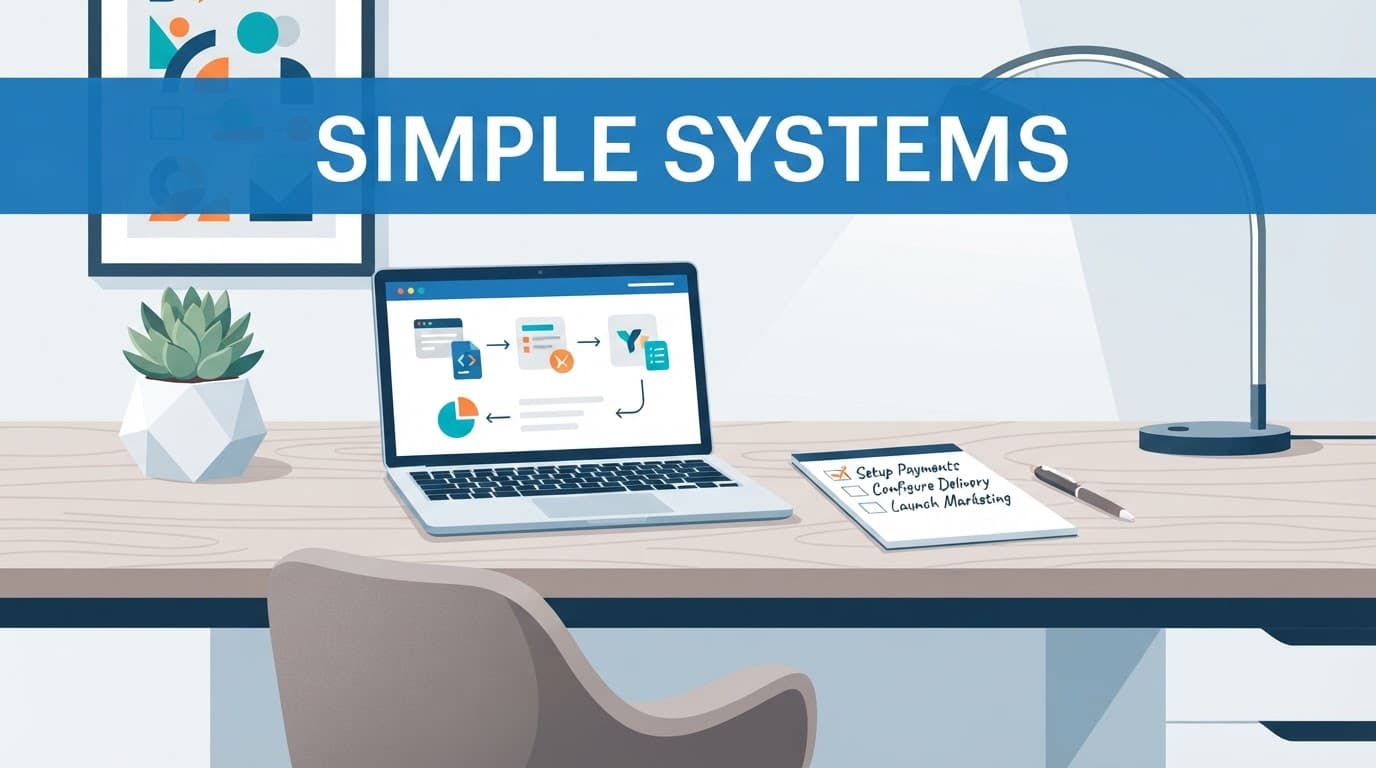
A finished product becomes a business when buyers can understand it, pay easily, receive access, and hear from you afterward. You don’t need a full website at the beginning, but you do need a clear sales page and dependable checkout.
### Choose a Selling Platform That Matches Your Buyers
Compare platforms using the same practical checklist:
- Check transaction fees, fixed payment charges, subscriptions, taxes, refunds, and currency conversion.
- Confirm support for cards, wallets, bank transfers, UPI, and other local payment methods your buyers use.
- Review file-size limits, file types, automatic delivery, download protection, and access controls.
- Look for email collection, discount codes, analytics, customer support, and simple tax records.
- Test the setup process, checkout experience, confirmation email, and mobile display.
A storefront lists products and handles checkout, while a marketplace may also help buyers discover you. A payment link collects money but may leave file delivery and customer records to you. A course platform adds lessons, progress tracking, and student access. A one-on-one booking tool is better for consultations, calls, or personalized feedback.
Gumroad and Payhip are examples to research for digital downloads. Instamojo, Razorpay, and Cashfree may suit payment collection in India, especially when UPI matters. SuperProfile, Topmate, and TagMango offer creator-focused combinations of products, services, or bookings. These are examples, not universal recommendations. Check each provider’s current pricing, payment support, payout schedule, tax terms, and acceptable-use rules before choosing.
Learn Copywriting, Search, and Social Promotion
Use the buyer’s own language when you describe the problem. Keyword research can reveal search terms for blog posts, while short videos, carousels, tutorials, previews, and case studies can demonstrate the result.
Start with one social platform and one search-based channel. A useful article or video can attract attention without turning every post into a sales pitch. Add a clear call to action, such as joining your email list, viewing a sample, or purchasing the product.
Track visits, clicks, email signups, and sales. Then spend more time on the channel that produces qualified buyers.
Create a Basic Launch and Follow-Up Plan
Use a simple sequence: explain the problem, publish a useful free example, show the product, invite early buyers, answer questions, and follow up with updates or related offers. An email list or permission-based contact system lets you reach interested people without depending only on social algorithms.
Prepare support replies for failed downloads, payment questions, and missing product access. Give buyers a clear contact method, response expectations, and unsubscribe option. Respectful follow-up builds trust.
Use Data and Customer Feedback to Grow Carefully
Review sales, conversion rate, traffic sources, refund reasons, support requests, and product usage. Low sales may indicate weak demand, unclear positioning, poor traffic, pricing friction, or checkout problems. Test one change at a time so you know what helped.
Improve your strongest offer before adding many products. Once it works, consider a bundle, useful updates, a related product, affiliates, or repeat-customer offers.
Build the Business Skills That Keep Digital Product Sales Sustainable
Selling digital products can fit around a job, studies, or other responsibilities, but it still requires planning, customer care, and regular review. Your long-term results depend on the systems behind each sale, not only on the quality of your files. These habits help you protect your time, money, customers, and reputation.
Manage Your Time With a Repeatable Product Workflow
Use the same basic workflow for each product: research, outline, create, test, publish, promote, support, and review. A weekly schedule helps you give every stage attention without letting marketing or support consume all your available time.
For example, reserve certain blocks for product creation, separate blocks for promotion, and a short period for customer questions. Limit your active tasks, batch similar work, and reuse checklists, templates, launch emails, and testing steps. Consistency matters more than working long hours.
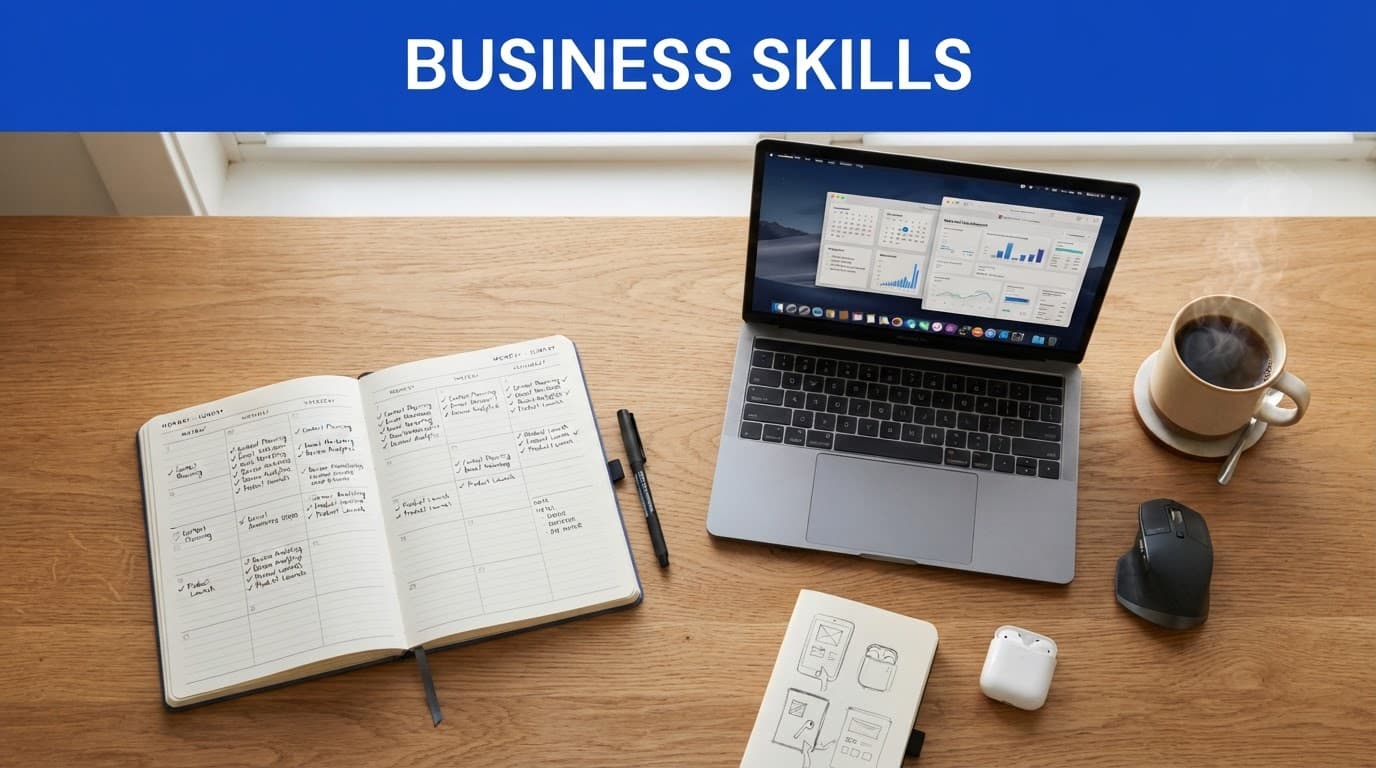
If you’re testing flexible income options while studying, these ways students can earn money from home include practical digital product ideas. Start with one small experiment, then set a realistic schedule for updates and support.
Track Money, Taxes, Rights, and Customer Data
Record revenue, platform fees, software costs, refunds, and taxes in a spreadsheet or accounting tool. Check the rules in your location for business registration, sales tax or GST, invoices, licenses, affiliate disclosures, commercial-use rights, and refund policies. For example, digital products and services in India may fall under GST rules, but your obligations depend on your business and customers.
Use original work or properly licensed assets, and keep private customer data out of unnecessary files and tools. Strong passwords, a password manager, and two-factor authentication reduce account risks. Ask an accountant or lawyer when a tax or legal question affects your business. Guessing can cost more than professional advice.
Know When to Use AI and When to Rely on Your Judgment
AI can help you brainstorm, outline, edit, summarize research, create draft variations, or produce a first-pass spreadsheet formula. However, you must fact-check its output, remove generic writing, protect confidential information, review licensing concerns, and test every customer-facing result.
Buyers pay for your subject knowledge, decisions, examples, and useful results. AI can speed up production, but your judgment is what makes the product accurate and worth using.
Frequently Asked Questions
You can start selling digital products with practical skills and a focused offer. These answers address common concerns before you publish your first product.
Do You Need Technical Skills to Sell Digital Products?
Basic computer use, writing, design, file management, and online payment skills are enough for many beginner products. You can create guides, templates, spreadsheets, checklists, worksheets, and design assets without coding.
Coding becomes useful for software, custom tools, and advanced automation, but it isn’t required for most downloadable products. Learn only the technical skills your chosen product needs, then improve your abilities as your business grows.
What Is the Best Digital Product to Sell as a Beginner?
Your best first product solves a problem you understand and meets a useful quality standard. A narrow template, checklist, worksheet, short guide, or small resource pack is usually easier to finish and test than a large course.
Before choosing the final format, validate the audience and problem. Ask potential buyers questions, share a sample, run a poll, collect waitlist signups, or test a small paid version.
Can You Sell Digital Products Without a Website?
Yes. A storefront, marketplace, or payment link can provide a product page, checkout, and automatic delivery after payment.
You still need a clear offer, reliable payment setup, customer support, and a way to bring interested buyers to your listing. Add a website later when it supports a clear goal, such as building an email list or publishing search-focused content.
How Much Does It Cost to Start Selling Digital Products?
Starting costs can stay low when you use free or inexpensive creation tools and a platform that charges per transaction. You may still pay for software, branding, email marketing, advertising, payment processing, taxes, or professional services.
Begin with essential tools and check each provider’s current fees before committing. Include refunds, maintenance, and support time in your budget.
How Do You Get Your First Digital Product Customers?
Start with people who already understand the problem, such as your existing audience, professional network, community, or early test group. Share useful content, offer a sample, demonstrate the product clearly, and invite interested people to buy.
Ask early customers what worked and what confused them. Request permission before using specific feedback as a testimonial, and avoid promising guaranteed income.
How Long Does It Take to Become a Digital Product Seller?
You can publish a small product within days or weeks, but consistent selling usually takes longer. Your timeline depends on research, product complexity, audience access, platform setup, and how often you promote and improve the offer.
Focus on completing a small test and learning from real buyers. Repeatable skills develop faster when you publish, measure results, fix problems, and continue promoting.
Conclusion
Selling digital products is built on practical skills, not a single secret technique. You need to choose a narrow problem, validate demand, create a useful solution, explain its value clearly, set up dependable payment and delivery, promote it consistently, and improve the product with customer feedback.
You can begin with one small product and simple tools, then add more advanced systems as your results justify them. This approach also lets you test whether digital products fit your broader income plans, alongside other jobs you can start without a degree.
Choose one audience and write down three recurring problems they face. Select one small format, such as a checklist, template, spreadsheet, or short guide. Test the idea with a sample, conversation, waitlist, or small paid version before investing heavily. Your first goal is not to build a large catalog. It is to prove that one useful solution helps a specific buyer.
This post is last updated on August 9, 2026
About The Author
