Selling digital products such as templates, ebooks, courses, and downloadable files can be appealing because you don’t need inventory, packaging, or shipping. Once your product is ready, customers can buy and receive it online, giving you a practical way to build income around your skills.
However, many beginners spend nearly all their time creating the product and overlook the work that helps it sell. Poor research, vague positioning, confusing pricing, weak marketing, unreliable payment setup, and slow customer support can hurt sales even when the product itself is useful. A focused launch your first digital product plan can help you test demand and avoid costly rework.
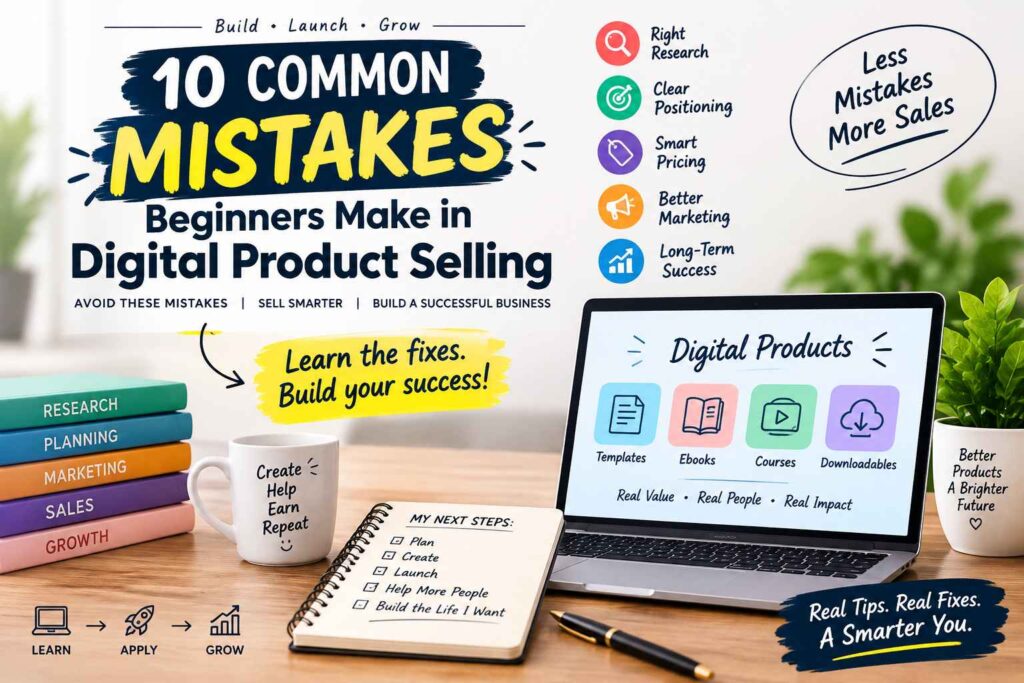
This guide covers 10 common mistakes beginners make in digital product selling, along with clear fixes you can apply before and after launch. Use these lessons to build a product people want, present it clearly, and support buyers after they purchase. For another beginner-friendly walkthrough, watch How to Sell Digital Products Online.
Key Takeaways
- Validate demand before creating a product, then solve one specific customer problem with a focused offer.
- Keep your first product simple, useful, and easy to explain instead of building an oversized course or ebook.
- Set prices after calculating platform fees, payment costs, taxes, refunds, and your product’s actual value.
- Use dependable checkout and delivery tools, then promote through more than one channel, including email.
- Gather customer feedback after launch and improve the product, sales page, and support process over time. Learn more about essential digital product seller skills.
Common Mistakes Beginners Make in Digital Product Selling
Beginners often focus on creating a polished file before confirming that buyers want it. A smaller first launch reduces wasted time, support demands, and financial risk. Test the idea, define the buyer, and solve one problem before expanding the offer.
Creating a Product Before Checking for Real Demand
Personal interest can point you toward an idea, but it doesn’t prove customers will pay. You might spend weeks making a gardening ebook, only to discover that your audience wants a planting calendar or pest-control checklist instead.
Look for evidence before creating the full product. Review buyer questions, search suggestions, Reddit discussions, social media comments, and competitor reviews. Then speak with potential customers about what they’ve tried, where they get stuck, and what result they want.
Test one clear promise with a short survey, sample, waitlist, or small pre-sale. For example, offer a checklist that helps new freelancers prepare their first client proposal. A few paid orders provide stronger evidence than hundreds of likes. Likes show attention, but payment shows buying intent.
Making the First Product Too Large or Too Complicated
A 20-video course, 100-page ebook, six-hour course, or full bootcamp can delay your launch for months. Larger products also create more questions, updates, technical problems, and refund requests. Meanwhile, you learn less about what customers actually value.
Start with a focused minimum viable product, such as a short guide, template bundle, checklist, mini-course, or small workshop. One useful resource that solves a defined problem can produce better feedback than a huge library that overwhelms buyers.
Small doesn’t mean careless. Check the instructions, improve the design, remove errors, and make the promised outcome clear. Quality means helping the buyer complete a specific task without unnecessary material.

### Choosing a Broad Niche Instead of a Clear Buyer and Outcome
“General digital marketing course” describes a topic, not a strong offer. A clearer promise might be a 10-day course that helps a new freelancer land a first client through outreach.
Define four points before you build:
- Who is the buyer?
- Which problem keeps slowing them down?
- What result should they reach?
- When do they need help?
Generic planners and budget spreadsheets also need a distinct audience or useful feature. A budget spreadsheet for college students paying off credit card debt is easier to position than a spreadsheet for everyone. Review these digital product business ideas while choosing a focused offer, then follow a simple start selling digital products action plan.
Why Good Digital Products Still Fail to Get Sales
A useful product can still fail when buyers don’t understand its value, can’t find it, or don’t trust the seller. Creating the file is only one part of selling. You also need a clear launch, steady promotion, and a sales page that turns attention into action.
Waiting for Perfection Instead of Launching and Learning
Perfectionism is a business risk, not only a time-management problem. Endless editing, extra features, and delayed promotion keep your product away from real customers. Without customer questions and usage data, you may spend weeks improving details buyers never needed.
Set a launch date and define what “good enough” means before you continue editing. Release a useful version one, then improve it based on actual feedback. Early buyers should receive a clear description of what’s included, along with any planned updates and expected delivery dates.
A small launch gives you evidence. If several customers ask how to use one template, that question may guide your next tutorial or revision. Real buyer behavior is more useful than guessing in private.
Relying on a Marketplace Listing to Bring in Buyers
Uploading a product to Etsy, Gumroad, or another marketplace doesn’t replace traffic, trust, or a strong sales message. Marketplaces can support checkout and discovery, but your listing still competes with many other offers.
Choose one or two channels and create a simple distribution plan. You could publish a YouTube tutorial, write a helpful blog post, share practical Pinterest content, or build an email newsletter. A partnership can work too. For example, a productivity creator might recommend your planning template to an audience that already needs it.
If you want to reach buyers in different markets, review this guide to sell digital products globally. Track each step of the funnel:
- Page visits show whether your promotion attracts attention.
- Product-page views reveal whether people reach the offer.
- Email signups measure growing interest.
- Purchases show whether the message and checkout convert.
The weak point tells you what to fix next.
Writing Features Instead of Showing the Product’s Value
A list of file types, modules, pages, or bonuses may leave buyers asking, “What will this help me do?” Lead with the outcome instead. Your sales page should explain the problem, promised result, product contents, use cases, preview, proof, price, refund terms, and a direct call to action.
For example, replace “30 worksheets” with “a guided system for finishing your weekly content plan.” The feature describes the files; the benefit explains the progress buyers can make.
Your platform also affects fees, checkout, delivery, and discovery. Compare platforms for selling digital products before choosing where to publish. A clear offer on the right platform gives buyers fewer reasons to hesitate.
Pricing and Checkout Errors That Cost Beginners Customers
Pricing and payment choices affect more than revenue. They shape how buyers judge your product, whether they trust the offer, and how much profit remains after fees, support, updates, refunds, and promotion.
Underpricing, Copying Competitors, or Discounting Too Often
Fear-based pricing often makes beginners set the lowest number they can defend. However, an unusually cheap product can suggest limited quality or support. It also leaves little room to fix problems, add updates, answer customer questions, or promote the product profitably.
A low introductory price can help you gather early buyers and feedback. A permanent low price is different because it becomes difficult to raise later. A strategic discount has a clear reason, such as a launch period, a seasonal event, or a limited bonus.
Compare the outcome and level of help, not only your competitor’s price. A template that saves a buyer several hours may deserve a higher price than a larger file that offers little guidance. Your audience’s budget, the problem solved, product depth, support level, competitor value, and business costs should all influence the decision.
Test a simple price range instead of searching for one perfect number. Explain any launch discount clearly, set an end date, and avoid constant sales. When buyers see “50% off” every week, they learn to wait for the next promotion.
Digital products often have fewer overhead costs than physical goods, but customers still expect reliable delivery, useful instructions, and responsive support. Compare digital products and physical products before assuming a high margin means every price will work.
Making Checkout Hard for the Audience You Want to Reach
A ready buyer can abandon the purchase after seeing an unexpected currency, hidden fee, limited payment method, or confusing delivery step. A slow mobile page, forced account creation, or payment failure creates the same result.

Test the complete checkout on your phone. Confirm that payment succeeds, the file or login arrives automatically, and refund terms appear before payment. Sellers serving Indian customers should consider INR pricing and UPI. Global sellers should offer trusted payment options where practical, while confirming taxes, currency rules, and local requirements before launch.
Finally, check platform fees, refund policies, and payout timing before choosing a tool. A checkout that converts well but pays you late or removes too much revenue can still damage the business.
The Trust and Retention Mistakes That Hurt Long-Term Growth
The first sale is only one part of the business. Buyers also need a safe purchase, clear instructions, responsive support, and a reason to return or recommend your product.

### Ignoring Customer Feedback, Reviews, and Support Questions
Customer questions are free product research. When several buyers ask the same question or get stuck at the same step, your instructions probably need improvement. Don’t treat repeated confusion as a buyer problem.
Send a short follow-up after purchase. Ask whether the product was easy to use, where the buyer struggled, and what would make it more useful. You can also request an honest review after they’ve had time to use the product. Watch support conversations for patterns, then update unclear explanations, screenshots, examples, or setup steps.
Use testimonials truthfully and ask for permission before publishing them. Never edit a review until it changes the buyer’s meaning, and don’t imply results that the customer didn’t claim. Trust takes time to build and seconds to lose.
A simple support policy also reduces uncertainty. State:
- When buyers can expect a response.
- Which issues qualify for a refund.
- Where customers should request help.
- What information they should include.
These details make the buying experience feel safer and help you manage support without promising constant availability. For more retention ideas, customer retention strategies can help you plan follow-ups beyond the initial purchase.
Launching Once, Then Failing to Update or Build an Owned Audience
Launch day isn’t the finish line. Review your product regularly and replace outdated examples, broken links, old screenshots, and platform instructions. Keep a short version history so buyers can see what changed and when.
At the same time, build an email list or another channel you control. Social algorithms and marketplace search can change without warning, but an owned audience gives you a reliable way to announce updates, helpful content, and related products.
That approach can support sustainable growth alongside work or school through a digital product side hustle. Students can also explore earning money from home as a student, while keeping expectations realistic because digital products often take time to gain traction.
A Simple Recovery Plan for a First Digital Product Launch
A disappointing launch doesn’t mean your product has no potential. Treat the first attempt as useful evidence, then fix the weakest part of the buying process before promoting it again.

### Follow the Launch Order
Work through these steps in sequence. Each one removes a common mistake from your original launch.
- Choose one buyer and one problem. Describe who needs help and the result they want in one clear sentence.
- Validate demand with customer conversations, a waitlist, a sample, or a small pre-sale. Interest matters, but paid commitment provides stronger evidence.
- Create a small product that solves the selected problem. A focused template or short guide is easier to test than a large course.
- Set a value-based price after considering the outcome, support time, platform fees, refunds, and payment costs.
- Select a suitable selling platform. Compare checkout features, delivery options, fees, and payout terms using these digital product selling platforms.
- Test checkout and delivery on your phone. Confirm that payment works, the download arrives, and the instructions are easy to follow.
- Prepare a traffic plan before launch. Choose one or two channels, such as email, search content, YouTube, or partnerships. This guide to selling without an audience offers practical promotion ideas.
- Launch before perfection takes over. Set a date, publish the useful version, and explain what buyers receive.
- Collect feedback through a short follow-up email. Ask where customers got stuck and what result they achieved.
- Make the first update quickly. Fix confusing instructions, broken links, missing examples, or checkout problems before adding new features.
Diagnose the Weak Point
Your numbers can show where recovery should begin:
- No views usually means a traffic or positioning problem. Improve distribution, audience targeting, or the product promise.
- Views but no sales usually means a trust or offer problem. Add previews, proof, clearer benefits, pricing context, or better refund information.
- Sales with refunds or support issues usually means a product or delivery problem. Repair the files, instructions, access process, or customer support system.
Start with one correction, then measure the next launch instead of changing everything at once.
Frequently Asked Questions
These answers address practical questions that often come up before and after a first digital product launch. Use them to make decisions based on customer evidence instead of guesswork.
What is the easiest digital product for a beginner to sell?
The best first product is usually a small resource that solves one clear problem. A template, checklist, worksheet, short guide, or mini-course can be easier to create, explain, deliver, and improve than a large course or ebook.
The format matters less than the audience fit and usefulness. A simple budget template for college students may sell better than a polished planner designed for everyone. Start with the task your buyer wants to complete, then choose the format that helps them finish it.
How do I know if people will buy my digital product idea?
Look for repeated questions, current spending, search interest, existing alternatives, and direct conversations with likely buyers. Reviews of competing products can reveal missing features, confusing instructions, or problems customers still want solved.
A paid test, pre-order, or waitlist gives stronger evidence than social media engagement alone. Likes and comments show attention, but a payment or email signup connected to a clear offer shows more serious intent. Resources such as digital product creation examples can also help you compare formats without copying another seller’s offer.
How much should I charge for a digital product?
Your price should reflect the outcome, depth, support, audience, and available alternatives. Time spent creating the file matters, but it shouldn’t be the only factor. A short template that saves a buyer hours may deserve a higher price than a longer guide with little practical value.
Test a reasonable price range and track conversions, refunds, and customer feedback. Competitor pricing can provide context, but copying it may ignore differences in quality, support, and audience.
Do I need an email list before I launch?
You don’t need a large email list to launch. However, collecting interested subscribers early gives you a reliable way to announce the product, teach useful concepts, and follow up after release.
Offer a useful free sample, such as one worksheet or a short tutorial, alongside a focused signup promise. Even a small list can provide valuable feedback when subscribers match your intended audience.
Should I sell on a marketplace or my own website?
A marketplace can provide discovery, built-in checkout, and delivery tools, while your own website gives you more control over branding, customer relationships, and product presentation. Your choice should depend on your audience, budget, technical skill, fees, payment options, and long-term goals.
Many beginners start with a marketplace to test demand, then add a website as their catalog grows. Review the platform’s payout rules, customer-data policies, and transaction fees before committing.
What should I do if my first product gets no sales?
Don’t immediately create a new product. Check your traffic, buyer fit, offer clarity, sales-page trust, price, checkout process, and follow-up sequence to find where potential customers stop moving forward.
Change one major factor at a time and seek direct feedback from likely buyers. If the page receives no visits, improve promotion; if visitors leave without buying, revise the offer, proof, or checkout experience.
Conclusion
Selling digital products can look simple because there is no inventory, packaging, or shipping. However, success depends on more than creating a polished file. Beginners are more likely to make progress when they validate demand first, focus on one clear problem, explain the product’s value, and choose pricing and checkout options that fit their audience.
Most mistakes are fixable. A small, focused launch is better than months of hidden preparation because real buyers reveal what needs attention. After launch, promote consistently, review customer feedback, and improve the product or buying process based on what you learn.
Choose one mistake to fix this week. Take one measurable step, such as contacting potential buyers, revising your product promise, testing checkout, or planning your next promotion. Small corrections build a stronger digital product business than waiting for perfect conditions.
About The Author
